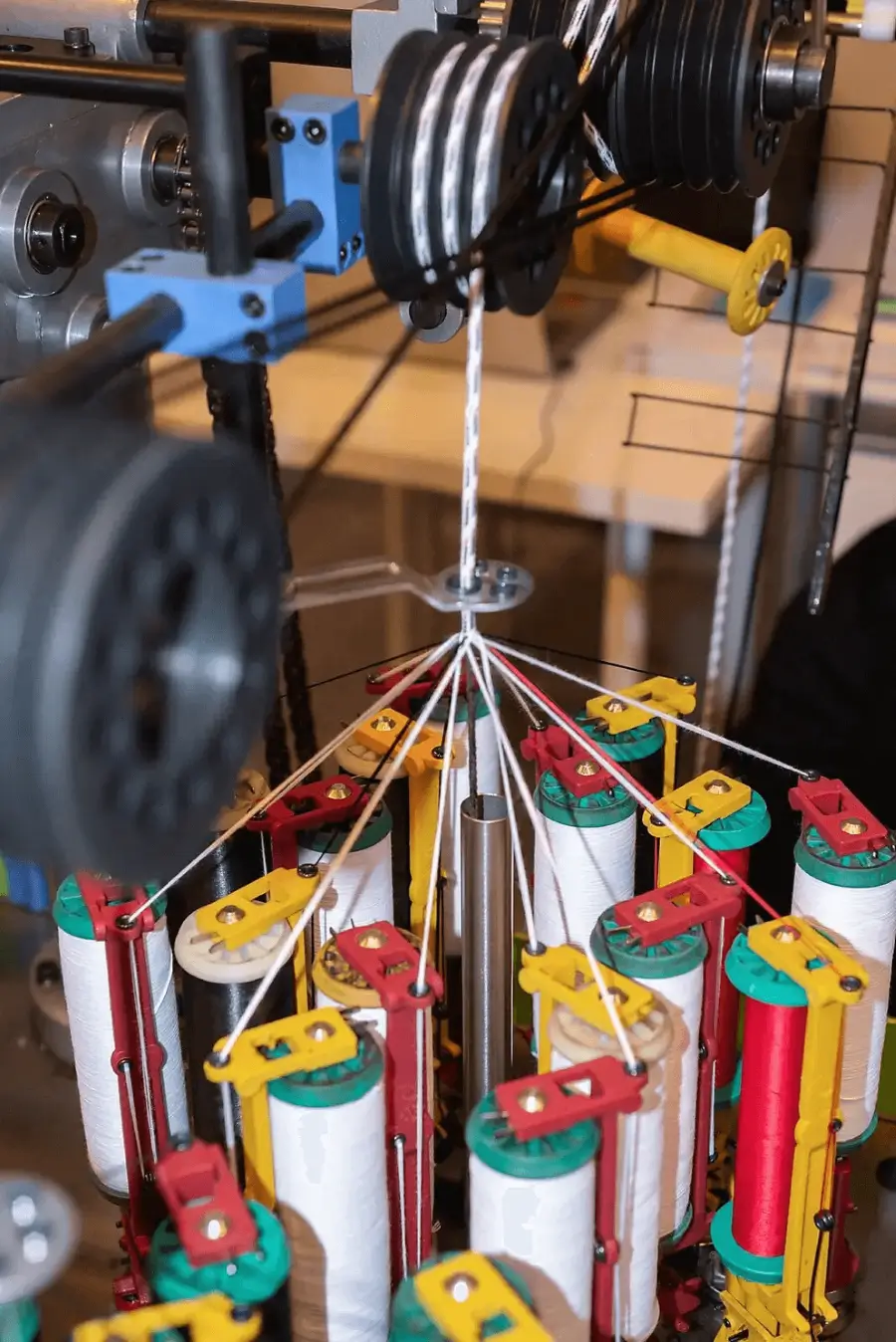
ARAMID ROPE / INDUSTRIAL APPLICATIONS
Kevlar-Seil
High-Strength, Low-Stretch Braided Aramid Rope
Kevlar rope solutions for your controlled pulling, high-tension assemblies and selected heat-exposed industrial applications. We provide custom-made diameters, rope construction, protective cover, end termination and delivery format that only suit your project.

Kevlar-Seil
Duracordix Kevlar rope is a type of rope made from Kevlar brand fiber(kevlar thread), which are known for their high strength and resistance to heat( a melting point at 450°C )and chemicals. Kevlar is a synthetic material developed by the DuPont company in the 1960s and It’s a type of aramid fiber.
- High strength-to-weight ratio
- Flammhemmend
- Geringe Dehnung
- Single Braided & Double Braided Construction
Kevlar Rope & Aramid Cord
Kevlar aramid rope is a high-performance synthetic rope; it is 6 times lighter than steel wire rope of the same strength. and it has greater heat resistance than UHMWPE, nylon, or polyester and very low stretch. We can also customize the aramid cordage with the single-braided and double-braided construction, diameter, length, color, etc. The right combination depends on load cycles, bending, contact surfaces, and exposure conditions.
It can be used for your applications, like safety & rescue, military & defense, and other high-temperature operations. Products like paragliding lines, kite strings, and fire props for the stage.
Duracordix can provide you Kevlar rope ranging from larger industrial rope to smaller aramid cordage applications. We can also provide you protective sheathing (sleeve), reel packages, and appropriate hardware terminations.
hauptsächlich Eigenschaften
Erkundung der Kerneigenschaften des Kevalr(Aramid)-Seils von Duracordix
Kevlar ropes can withstand forces of up to 8 times greater than steel wire of equivalent weight, it ensures you durability in extreme conditions.
Mit einer Zersetzungstemperatur von 450 °C (932 °F) behält Kevlar seine Festigkeitseigenschaften in Umgebungen mit hohen Temperaturen.
Mit einer Bruchdehnung von lediglich 3,6% bieten Kevlar-Seile eine minimale Dehnung und gewährleisten so optimale Kraftübertragung und Stabilität während des Gebrauchs.
Mit einem Widerstandsfaktor von 60%, der höher ist als bei Standardfasern, gewährleistet es selbst bei härtester Handhabung eine längere Lebensdauer.
Kevlar weist über 200 Stunden hinweg eine minimale Kriechneigung von nur 0,7% auf und gewährleistet so eine gleichbleibende Länge und überlegene strukturelle Integrität unter Belastung.
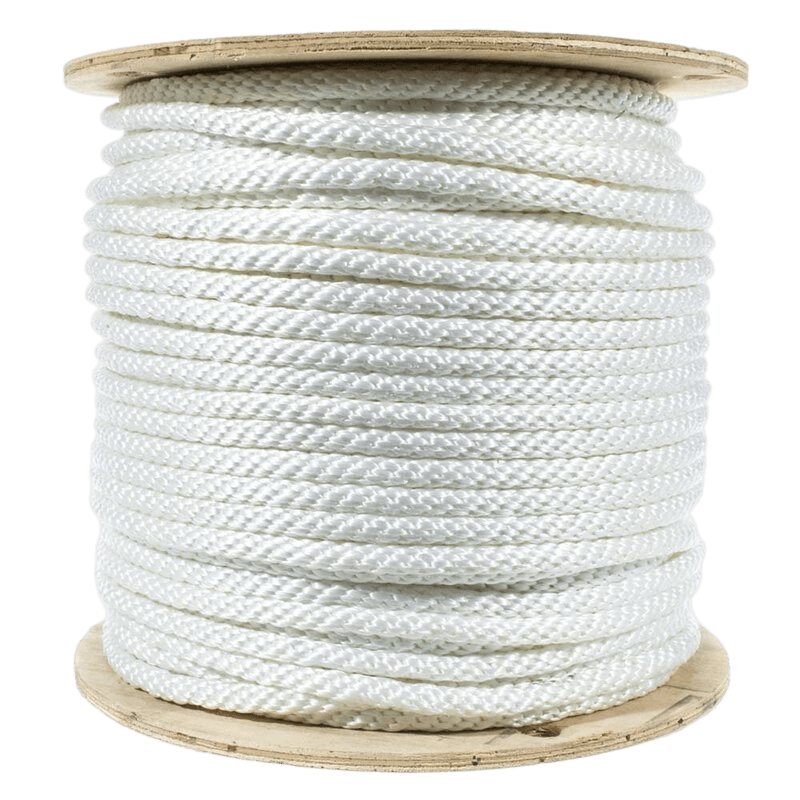
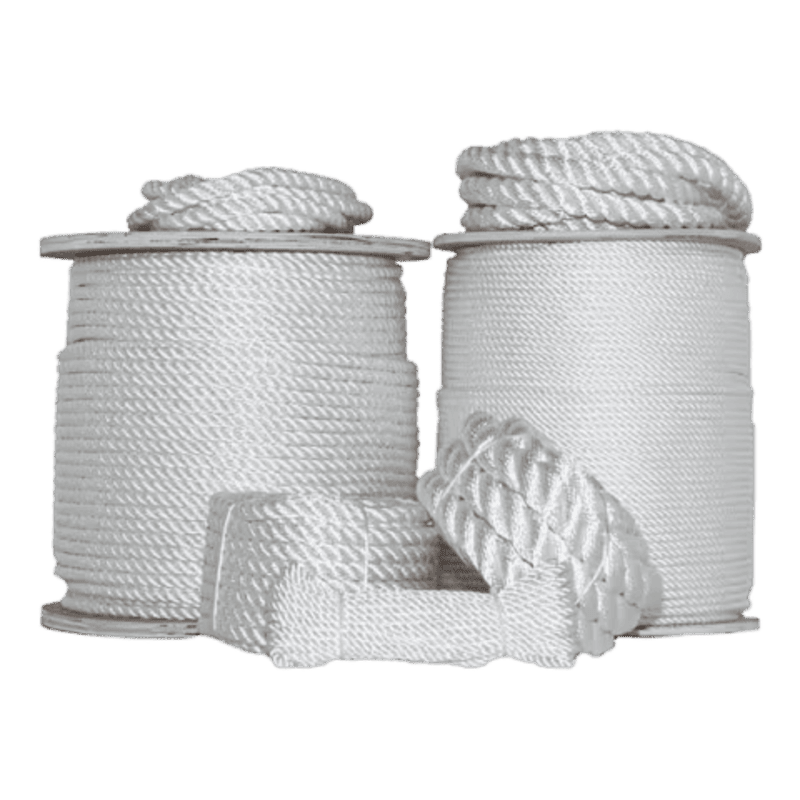
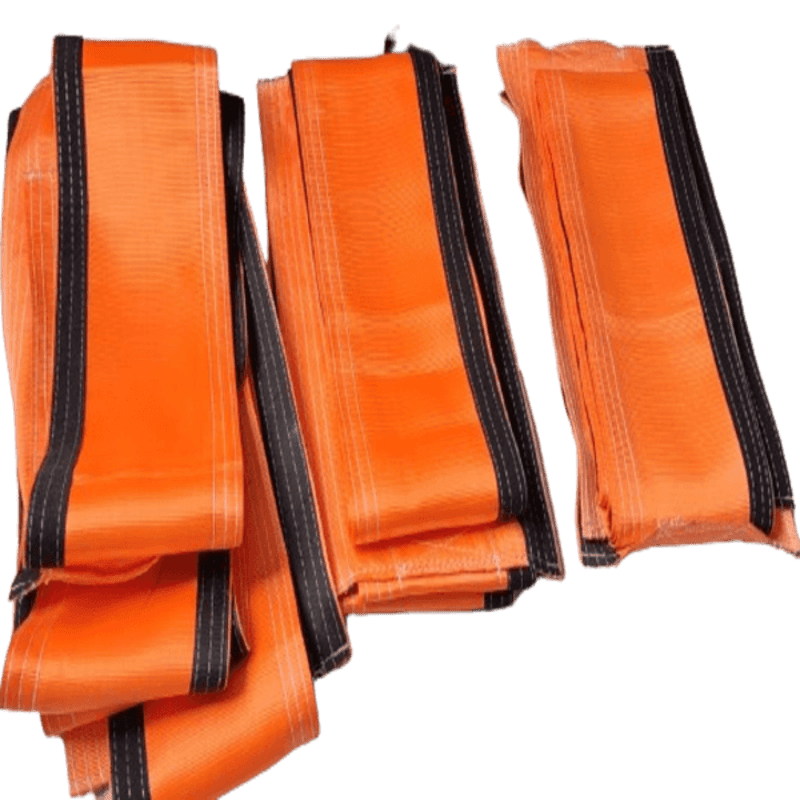
Kevlar Rope Constructions & Cordage
Compare braided Kevlar rope, small-diameter cord, protective jackets and end terminations before choosing a specification.
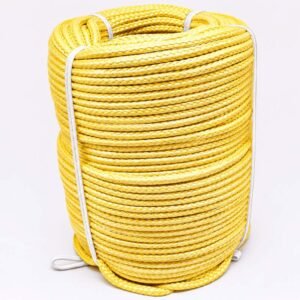
A compact construction for selected industrial pulling and tension-member use.
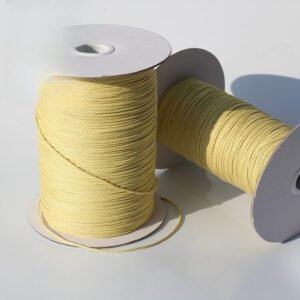
For fine tension members, equipment lacing and precision assemblies.
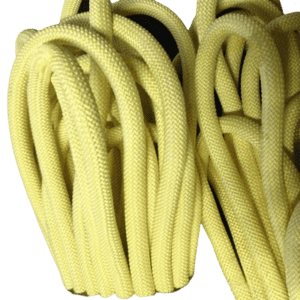
Engineered sheaths for improving your Kevlar rope’s UV resistance, abrasion and handling protection.
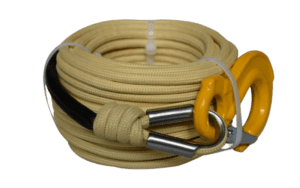
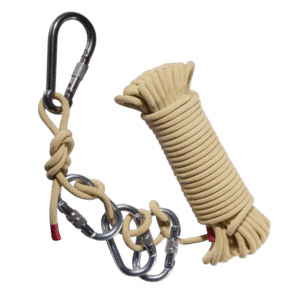
Duracordix can customize the engineered eyes, sleeves, or fittings for you.
Prüfung und Qualitätssicherung
Duracordix ensures our Kevlar rope quality through strict breaking strength and heat resistance testing.
- Material inspection: we do lot inspection for income kelvar aramid fiber and only ensure only qualified raw material is used for production.
- Batch testing: we do sample rope breaking strength testing for our finished rope and issue you the test report.
- Dokumentation: we can provide you final inspection and related test report for our kevlar rope.
- Third-party inspection: we can also provide you 3rd party test report as you required and provide the certification.
Kevlar Rope Strength Chart
| Durchmesser (mm) | Circumference (in) | KTEX (g/m) — as labeled on existing site | Breaking strength (kN) |
|---|---|---|---|
| 6 | 3/4 | 30 | 19 |
| 8 | 1 | 52 | 34 |
| 10 | 1-1/4 | 81 | 55 |
| 12 | 1-1/2 | 120 | 75 |
| 16 | 2 | 210 | 130 |
| 18 | 2-1/4 | 265 | 172 |
| 20 | 2-1/2 | 328 | 205 |
| 24 | 3 | 462 | 308 |
| 28 | 3-1/2 | 632 | 429 |
| 32 | 4 | 830 | 539 |
| 36 | 4-1/2 | 1050 | 582 |
| 40 | 5 | 1290 | 715 |
| 44 | 5-1/2 | 1570 | 869 |
| 48 | 6 | 1860 | 1030 |
| 52 | 6-1/2 | 2190 | 1210 |
| 56 | 7 | 2540 | 1410 |
| 60 | 7-1/2 | 2910 | 1610 |
| 64 | 8 | 3310 | 1830 |
| 72 | 9 | 4190 | 2320 |
| 80 | 10 | 5180 | 2870 |
| 88 | 11 | 6270 | 3470 |
| 96 | 12 | 7460 | 4130 |
| 104 | 13 | 8750 | 4850 |
Kevlar Rope Applications
Select an application to review key design questions and technical considerations.
Firefighting & heat-exposed equipment: Kevlar-Seil Und heat-resistant aramid rope may be considered for selected equipment components where low stretch and resistance to melting are relevant. Material heat resistance alone does not qualify an assembly for firefighting or life safety. Confirm the finished rope’s operating temperature, heat exposure time, construction and required approvals.
Search & rescue equipment: High strength-to-weight ratio can be useful in engineered rescue equipment and controlled handling systems. General-purpose braided Kevlar rope is not a substitute for a certified rescue or personnel-support rope. Assess repeated bending, shock loading, terminations and applicable safety requirements before specifying a product.
Rock climbing & mountaineering: High tensile strength does not by itself make a Kevlar-Kabel suitable for arresting a fall. Low-stretch Kevlar rope is not an appropriate replacement for a certified dynamic climbing rope. Only use completed products independently approved for the intended climbing or life-safety application.
Sailing & water sports: Aramid rope may be evaluated for selected low-stretch tension members in sailing equipment where construction, wear protection and loading match the design. Confirm bending fatigue, UV shielding, wet conditions and abrasion protection before selecting a jacketed aramid rope.
Aerospace & parachute-related components: Aramid fibers can be specified in selected technical cords and reinforcement parts, but a Kevlar-Seil product must not be described as approved for parachute suspension or safety-critical aerospace systems without application-specific qualification.
Vehicle, aircraft & marine tethering: For controlled restraint or towing-related equipment, a high-strength aramid rope may be considered after checking dynamic loads, hardware compatibility, bending cycles, abrasion and termination efficiency. Shock-sensitive applications need particular review.
Protective assemblies: Aramid fibers are used in engineered protection systems; this does not mean that generic rope nets provide verified ballistic, blast or fragment protection. Such claims require system-level design and testing.
Winching & hoisting: Braided Kevlar Rope may be assessed for controlled pulling, winching and certain engineered lifting assemblies where weight reduction and geringe Dehnung matter. Selection requires verified breaking strength, working-load limits, drum or sheave compatibility and validated terminations; never assume interchangeability with steel wire rope.
Reinforcement: Kevlar-Kabel and aramid tension members can reinforce selected industrial products and technical assemblies. Specify strand construction, dimensions, tension profile and installation method.
Glass, metal & other heat-exposed processes: Heat-resistant aramid rope may be useful for specialized handling or equipment assemblies, subject to real temperatures, exposure duration, contact surfaces, coating and load. Kevlar does not melt, but strength can deteriorate with prolonged elevated-temperature exposure.
Kevlar vs UHMWPE vs Nylon vs Polyester
| Material | Typical selection driver | Important limitation to check |
|---|---|---|
| Kevlar / para-aramid | Low stretch (the site lists 2% in its comparison table) and thermal resistance | UV, flex fatigue, jacket and termination |
| UHMWPE / HMPE | Very low weight and high strength; website comparison lists 3–4% stretch | Low melting temperature, creep and heat exposure |
| Nylon (PA) | Energy absorption / elastic response; website comparison lists 25–30% stretch | Stretch, moisture and dynamic load control |
| Polyester (PET) | Outdoor and general-purpose stability; website comparison lists 10% stretch | Weight and strength for a given size |
These are qualitative selection considerations, not a substitute for product-specific strength and service data. Explore our UHMWPE Rope specifications.
How to Select the Right Kevlar Rope
Die richtige Wahl treffen Kevlar-Seil begins with how you will use it. Review the points below before requesting custom Kevlar rope oder Aramidseil for an industrial application.
01 / Required Strength & Load Profile
Share the intended working load, peak load, load cycles and whether the system may experience sudden loading. Minimum breaking strength and any design factors must be confirmed for the finished rope and its termination. Kevlar rope should not be selected for dynamic recovery or personnel safety based on fiber strength alone.
02 / Diameter, Construction & Elongation
Choose the diameter and braided Kevlar rope construction around your equipment and allowable elongation. For small components, Kevlar cord may be appropriate; large industrial pulling installations may need an engineered construction with a separate protective jacket.
03 / Heat Exposure & Service Temperature
Describe continuous and peak temperatures, exposure time, nearby heat sources and any contact with hot surfaces. Para-aramid does not melt like thermoplastic fiber, but heat can degrade its properties. A finished heat-resistant aramid rope needs application-specific temperature validation.
04 / Winch, Sheave & Bend Radius
Supply the drum diameter, sheave groove, contact geometry and bending frequency. Tight bends, repeated flexing and internal abrasion can reduce rope life even where the straight-line tensile strength is high.
05 / Chafe Protection, UV & Chemicals
Note sunlight exposure, dirt, moisture, chemical contact and abrasive edges. Jacketed aramid rope and local chafe guards may be considered for outdoor and high-contact applications, subject to the selected construction and inspection plan.
06 / End Terminations & Hardware
Tell us whether you need plain ends, eyes, thimbles or assembled fittings. Include hardware drawings and clearances. Knots, splices and bespoke terminations require technical review; any strength retention claim must be supported by validation.
07 / Testing, Quality & Documentation
Specify the required test method and acceptance criteria. DURACORDIX can discuss material traceability, inspection records and representative batch tests; destructive strength testing is not performed on every finished rope. Check available certification or third-party inspection before placing an order.
08 / RFQ Details for OEM & Bulk Orders
Include the quantity, cut or reel length, diameter, application, expected loads, packaging preferences, delivery destination and any OEM identification needs. We can then review the feasible configuration and provide an application-based quotation.
Safety note: General industrial Kevlar rope is not automatically suitable for climbing, firefighter rescue, personnel lifting, parachutes or blast protection. These applications require purpose-designed, tested and approved products.
For a broader material comparison, review our synthetic rope types before finalizing the rope specification.
Custom Kevlar Rope & OEM Supply
Diameter & rope construction: Discuss required size, braid design and fiber grade. The current DURACORDIX catalog lists diameters from 6 to 104 mm with published breaking-strength values from 19 to 4,850 kN across those sizes; confirm the exact construction and test basis for your order.
Reel lengths & cut lengths: Specify long continuous lengths, short assemblies or pre-cut components.
Jackets / sleeves: Review protection against rubbing, UV and hot contact.
End fittings: Specify interface drawings, eye dimensions, thimbles or hardware for evaluation.
Wholesale & OEM packaging: Provide annual demand, packaging artwork and shipping destination.
Inspection documentation: Request the applicable batch reports, dimensional checks and test method in the purchase specification.
Für Kevlar rope wholesale sourcing, please provide annual demand, packaging needs, required reports and destination.
For adjacent product requirements, explore our product range or include your drawing and specification in the inquiry below.
Why Choose Duracordix for Kevlar Rope?
Application-first selection: we review your equipment, load, temperature and service conditions before confirming a rope specification. Our current website describes more than 15 years of industry experience.
Custom rope configurations: discuss length, construction, jacket, termination, identification and private-label packaging. DURACORDIX currently describes 90% of its orders as customized.
Batch-based quality controls: order-specific inspection and supporting records can be reviewed before production. The website cites a 99.8% test pass rate; confirm the definition and reporting period for any formal use.
B2B supply: support for industrial buyers, OEM brands and distributors that need clear specifications and repeatable procurement. The website also reports 96% customer satisfaction, without publishing a survey period or sample size.
The current website also promotes 50% higher load capacity versus unspecified standard ropes and prices 20% below a market average. These comparisons are not a guaranteed performance or pricing commitment; request a project-specific quotation and test basis. Claims about performance, certificates, lead times or minimum order quantities should be confirmed in the quotation rather than assumed.
For application context, explore the marine rope solutions section; confirm every application against its own safety and performance requirements.
Quick RFQ · Kevlar Rope
Senden Sie Ihre Anfrage
Share your diameter, required strength, application and quantity.
Kevlar Rope FAQs
Answers to common industrial sourcing and product selection questions.
Kevlar rope is used in selected industrial pulling, technical rigging, heat-exposed equipment and specialized applications where high strength and low elongation are important. The rope construction must be matched to its intended use.
Yes. Kevlar is a heat-resistant para-aramid fiber that does not melt. However, the maximum service temperature of a finished rope depends on its design, load and exposure conditions.
Breaking strength depends on fiber grade, diameter, construction and testing conditions. Refer to the product specification table and request supporting test data for your required size.
Neither material is better for every application. Kevlar is often considered where thermal resistance and low elongation are important, while UHMWPE is often preferred for very low weight and high strength. Bending, UV exposure, abrasion and operating conditions should also be considered.
Kevlar fibers can lose mechanical strength through prolonged UV exposure. A protective cover or suitable rope construction should be considered for outdoor use.
Only a finished rope specifically designed, tested and approved for the intended life-safety application should be considered. General industrial Kevlar rope should not be assumed suitable for climbing or personnel rescue.
Termination options depend on the construction and intended load. Knots and splices can reduce rope strength, so an engineered termination should be assessed and tested where necessary.
Yes. You can discuss custom diameters, lengths, protective covers, end fittings and OEM packaging with DURACORDIX. Please provide your application and technical requirements for review.
Kevlar fiber is denser than water, so standard Kevlar rope should not be assumed to float. Buoyancy depends on the complete rope construction.
You can request a wholesale quotation by sharing your required specifications, quantities, packaging details and delivery destination.
DURACORDIX / ARAMID ROPE SOLUTIONS
Let’s Discuss Your Kevlar Rope Requirements
Whether you are sourcing braided Kevlar rope, industrial aramid cord or a custom OEM construction, tell us how your rope will be used. We can review suitable specifications, protective options and order requirements with your team.
From Your Requirements to a Rope Specification
✓ Rope diameter, construction and strength requirements
✓ Heat exposure, flexing and abrasion conditions
✓ Protective jacket, length and end terminations
✓ Custom packaging, batch inspection and documentation
Already have a specification or RFQ? Email us at info@duracordix.com.
TELL US ABOUT YOUR PROJECT
Request A Custom Kevlar Rope Quote
Share your product, application and quantity. Include diameter, breaking strength, length, operating conditions or drawings if available.
Your contact details will be used to respond to your inquiry. Please review our Privacy Policy before submitting.
 Deutsch
 English
 Español
 Français
 한국어
 Русский
 Português
 Suomi