Marine
High-Performance Synthetic Marine Rope Supplier & Solution Provider For Your Maritime Operations
Marine Rope & Synthetic Solutions by Duracordix
Duracordix is a leading global supplier and solution provider of high-performance marine grade ropes. They offer alternatives to heavy steel wire ropes. We provide synthetic ropes in materials including UHMWPE (HMPE), Kelvar, Nylon, and Polyester to meet your specific needs. we offer rope solutions for your applications such as mooring, tug towing, and offshore lifting.
Our mooring rope meets OCIMF MEG4 standards. Our high-performance HMPE rope is 80% lighter in the same diameter than Stahldraht, meanwhile it’s also buoyant and easy to handle. Our unique DMX Coating also enhances UV and abrasion resistance in harsh maritime environments.
Core Maritime Solutions
Ihre Schmerzpunkte
Traditional wire mooring rope is extremely heavy, it makes the mooring line handling an ergonomic nightmare for your crew. and it also has deadly snap-back risk. when it’s under tension, the energy it stored can lead damage to your equipment and injuries to your crews.
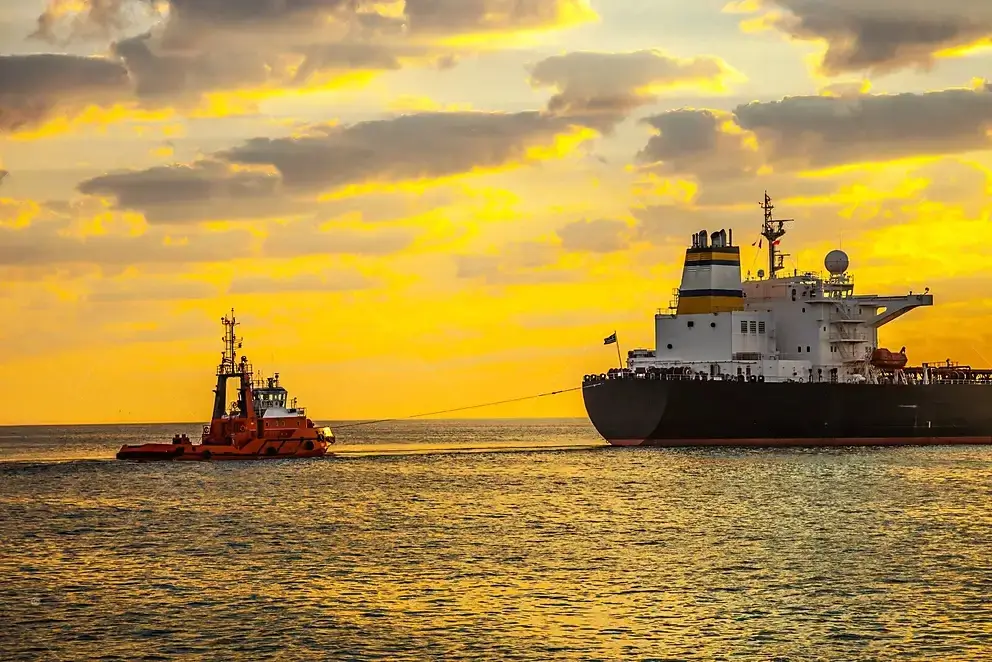
During tug and towing operations, the tug towing ropes need to bear the dynamic loading Und sudden tidal surges. These tensions can cause internal fiber friction and loss of the strength due to high-frequency shock impacts. it harms your towing system and can reduce the service life of your towing line.
In the Oil & Gas industry, your deep-sea installations require extreme precision. However, traditional steel wire is prone to corrosion Und excessive self-weight and also reduce your crane payloads. Dangerous wire burrs and deadly snap-back risks also threaten personnel. Most importantly, uncontrollable elongation under high loads leads to lost your position control.
Duracordix solutions
Our 12-Strand HMPE mooring line is only 1/7 of the weight in same strength compare to steel wire. it’s easy to handle and also offers zero rust. with our Null Snapback technology, it has minimal recoil in the unlikely event of failure. It can keep your crew in the safe zone. all are tested to meet Line Design Break Force (LDBF) requirements
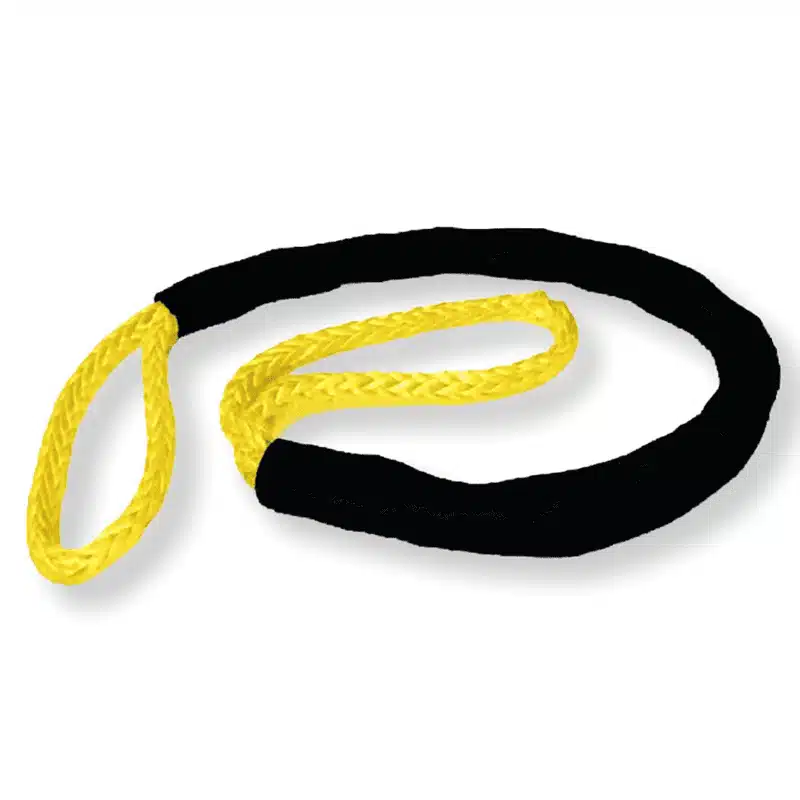
We integrate high-tenacity HMPE towing lines with specialized Nylon shock stretchers(mooring tail), The HMPE rope provides you high MBL (Minimum Breaking Load) the nylon pendant can absorb up to 25% more kinetic energy than other ropes. it reduce the peak impact load on the HMPE mainline and extend the service life of your towing system up to 40%.
Our HMPE and Kevlar slings maintain ultra-low elongation (3–5%), it ensures your superior dimensional stability for pinpoint positioning. At 1/7th the weight of steel , HMPE reduces submerged self-weight. Designed for your extreme Oil & Gas environments, our slings are corrosion-proof & acid-alkali resistant, with Kevlar withstanding 450°C. It helps you get maximum safety and payload efficiency where traditional steel wire fails.
Arten von Schiffstauen nach Material
Marine Rope Material Comparison
| Materialtyp | Core Advantages | Auftrieb | Stretch Rate | Max Temp | Best Applications |
|---|---|---|---|---|---|
| UHMWPE (HMPE) | Highest strength-to-weight ratio; Steel wire alternative; | Floats (0.97 SG) | < 3% (Very Low) | 145 degrees Celsius | Tug Towing, Ship Mooring, Anchoring, Yachting, Oil & Gas Platforms. |
| Kevlar (Aramid) | Extreme heat & cut resistance; Imported high-performance fibers. | Waschbecken | < 2% (Lowest) | 450 degrees Celsius | Tankers, Mooring Buoys, Racing Yachts, Rescue, High-Temp Environments. |
| Nylon | Superior shock absorption; Excellent rebound elasticity. | Waschbecken | 20-25% (High) | 215 degrees Celsius | Docking, Anchoring, Mooring, Fishing. |
| Polyester | Best UV & Abrasion resistance; Maintains strength when wet. | Waschbecken | Mäßig | 260 degrees Celsius | Sailboat Rigging, Long-term Mooring, Fishing, Water Sports. |
| Polypropylen (PP) | Lightweight; Most cost-effective; High visibility. | Schwimmkörper | Mäßig | 165 degrees Celsius | Safety Lines, Boat Towing, Fender Lines, Dinghies, Fishing. |
| Polyethylen (PE) | Good UV stability; Lightweight; General-purpose utility. | Schwimmkörper | Mäßig | 110 degrees Celsius | Fishing Netting, Buoy Lines, General Purpose. |
Hot Selling marine Rope
Absturzsicherungen
how to choose Right marine rope
1. Calculate Minimum Breaking Load:
Required MBL = Working Load × Safety Factor (SF)
For mooring or tug towing use: 4:1 oder 5:1(SF)
For offshore lifting: 7:1(SF)
2. Match Environmental Factors:
Does it need to be float? Use HMPE-Seil.
Need high strength, lowest weight? Use HMPE-Seil
Is there extreme heat? Use Kevlar-Seil
Is high stretch needed? Use Nylonseil
3. Length:
Mooring Line: mooring lines are typically 1.5 to 2 times the length of the vessel to ensure the safe docking.
4. Cost:
PP & PE: Economical options, the lowest tensile strength.
Nylon & Polyester: Mid-range performance; significantly higher breaking strength than PP/PE, but much lower than high-performance fibers.
HMPE & Kevlar: Premium grade; provide you superior tensile strength & the highest strength-to-weight ratio available.
As a professional marine rope supplier, Duracordix can give you more specific suggestions if needed.
Maintenance & Inspection
For building long-term Trust, Duracordix provides the essential safety knowledge to guide you and help protect your crew and equipment.
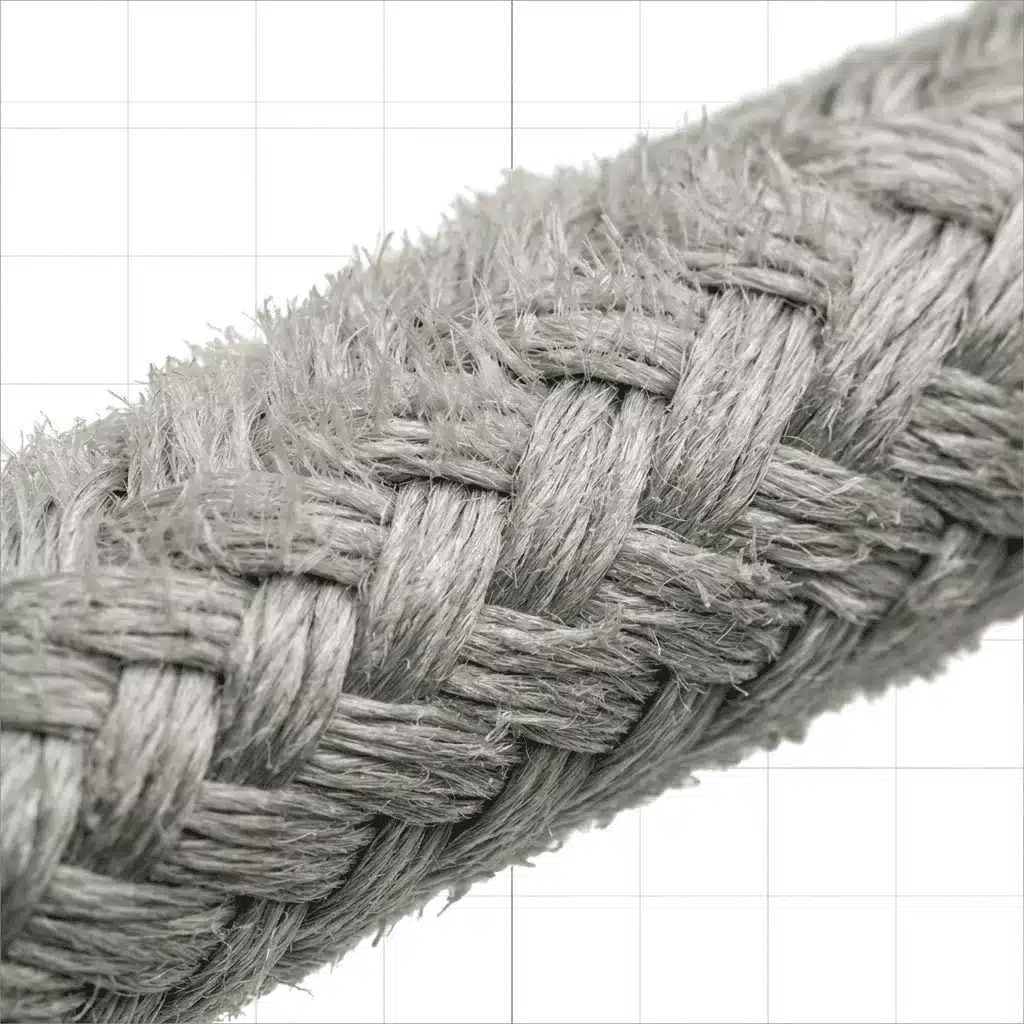
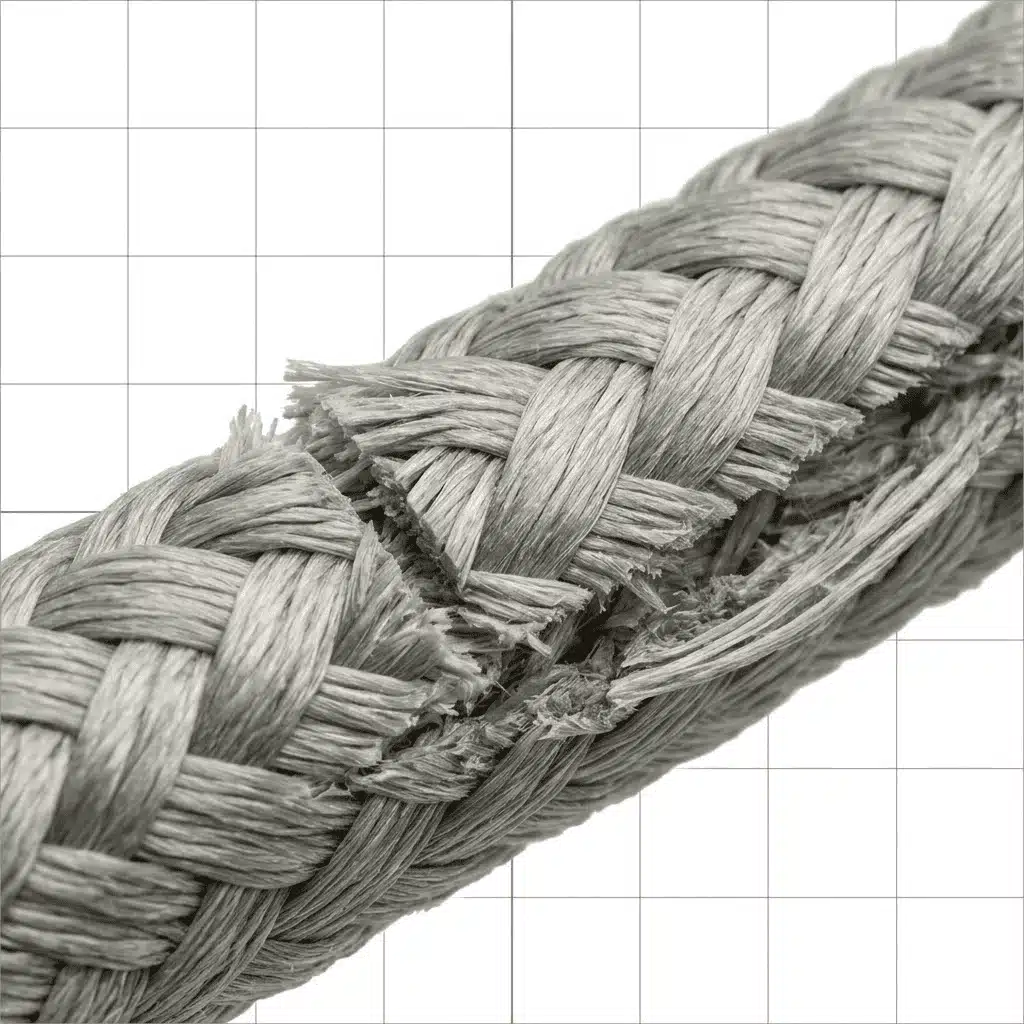
Regular visual inspections are mandatory to ensure your safety in marine environments. Use the following guide to assess your rope’s condition:
Acceptable Wear: Light surface “fuzzing” or abrasion is normal and it can be acted as a protective layer for inner fibers.
Critical Damage (Retire Immediately):
Glazing: Hard, shiny, or brittle patches caused by extreme friction heat or cut
Diameter Reduction: If a noticeable thinning is found, it means internal strand breakage or core failure.
Cuts: If there are any longitudinal or transverse cut deeper than 10% of the rope diameter, it can’t be used anymore.
Warum Duracordix wählen?
Kundenstimmen
Global Certifications


Duracordix quality is backed by the world’s leading classification societies such as CCS,ABS,LR,RINA,DNV GL,BV etc. our synthetic marine ropes are also tested & compliant with OCIMF MEG4
FAQs
Frequently asked questions addressing customer concerns
Why is UHMWPE rope preferred over steel wire for ship mooring?
Ultra-high molecular weight polyethylene (UHMWPE) rope, due to their superior strength-to-weight ratio, compare to steel wire rope, it's only 1/7 that of steel wire ropes in same strength. so it is extremely easy to handle and transport, significantly reducing the crew fatigue.
Their excellent chemical and corrosion resistance prevents them from rusting in the mooring marine environment like steel wire ropes, it offers excellent durability.
More importantly, their non-snapback property prevents them from experiencing violent rebound upon breakage. unlike steel wire ropes, it greatly improves the safety of your mooring operations.
Does Duracordix provide MEG4 compliant mooring lines?
Yes, Duracordix HMPE mooring lines are produced and tested to strictly follow the OCIMF MEG4 Guidelines. it ensure your mooring lines are all meet the requirements of LDBF (Line Design Break Force). Additionly, we can also provide the certifications of classification societies like CCS,ABS,LR,RINA OR DNV usw.
What is the benefit of the DMX coating on your marine ropes?
Our specialized DMX coating forms a protective layer on the fiber, improving Abriebfestigkeit by up to 30%. A specially formulated UV-protective agent further enhances UV-Beständigkeit, extending the service life of your marine rope.
How do I choose the correct length for a mooring tail?
For large vessels, the standard length is 11m (36 feet) or 22m (72 feet). The mooring tail is usually made of nylon(polyamide) as it has high elasticity (high elongation over 20%). It provide better absorption of energy under peak dynamic mooring loads and protect the safety of your personnel and equipment.
Which marine ropes are best for deep-sea oil and gas operations?
Deep-sea oil and gas operations need high-performance synthetic ropes like HMPE rope and Polyester rope.
HMPE can offer you the highest strength-to-weight ratio, exceptional chemical resistance and fatigue life, it significantly reduce the frequency of hazardous replacements and environmental impact.
Meanwhile, Polyester's superior UV and abrasion resistance make it great for long-term deepwater mooring.
In recent years, synthetic ropes are rapidly becoming the industry standard for deep-sea mooring, towing, and lifting.
What constructions of marine rope can you produce?
Duracordix can provide various constructions of marine rope like 3-Strand & 4-Strand Twisted marine rope, 8-Strand & 12-Strand single braided marine rope, double braided marine rope etc.
Can your ropes withstand freezing Arctic conditions?
Yes, Duracordix UHMWPE rope can maintain its original breaking strength even at -150 degrees Celsius, but steel wire rope will become brittle.
How do I identify when a marine rope needs to be retired?
Based on MEG4 inspection standards, when your rope shows a noticeably smaller diameter than before, and the surface areas become hard,glazed and brittle, that means it's reached a critical failure state. if internal damage or deep cuts surpass 10% its original diameter, the rope should be considered destroyed. so you need to replace it and require mandatory retirement.
Is it safe to use Polypropylene (PP) rope for heavy towing?
Duracordix does not recommend using polypropylene (PP) ropes for heavy-duty towing. While PP rope offers you good buoyancy and are cheap, their breaking strength is very low. it lacks the necessary breaking strength for high-tension towing tasks. it only suitable for light vessel applications like mooring lines for small boats or temporary dock lines.
For heavy-duty towing, we recommend ultra-high molecular weight polyethylene (UHMWPE) ropes, it has become the industry standard due to its highest Tensile Strength than other synthetic ropes.
What certifications do Duracordix marine ropes carry?
Duracordix can provide you 3rd parties certification from from major classification societies, including RINA,ABS, DNV, BV, LR, and CCS etc. we make sure our rope quality can meet your international standard.
How should I store my synthetic ropes during long-term docking?
Here are some steps to guide you to store your rope properly as below:
Step1: Duracordix recommends you to thoroughly rinse your fiber rope after each use to remove salt, oil, and debris on them.
Step2: Once it's fully cleaned, air-dry the rope in a cool, well-ventilated area. please note you should keep it from direct sunlight, as the fibers will be damaged by UV exposure.
Step3: Once it's dried completely, coil the rope and store it in a dedicated container and put it in a cool, dry place. you should make sure it's kept off the ground and away from chemicals.
By doing these steps, you can maximize the service life of docking lines and save replacement cost.