To select the appropriate mooring lines for recovery, mariners analyze precise breaking loads and evaluate the tested operating service life. A capacity above the 48 metric ton MBL level ensures total failure avoidance. Install 12-Strand UHMWPE or HMPE offering >48.0 MT MBL capacity, 0.97 specific gravity, and <4.0% stretch. Demand MEG4 certification documents and use marine grade polyurethanes to block microscopic salt crystal abrasion.
Let’s dive right in.
Are you navigating unpredictable waters and dealing with high-tension failures in emergency salvage operations? Selecting the best mooring lines for recovery requires rigorous technical analysis. Small equipment used by marine crews must have massive tensile strength. Synthetic fibers reduce harmful snapback risks for manufacturers. Adequate gear selection prevents disastrous operating maritime incidents globally and safely.
The Core Framework: How to Choose Mooring Lines for Recovery?
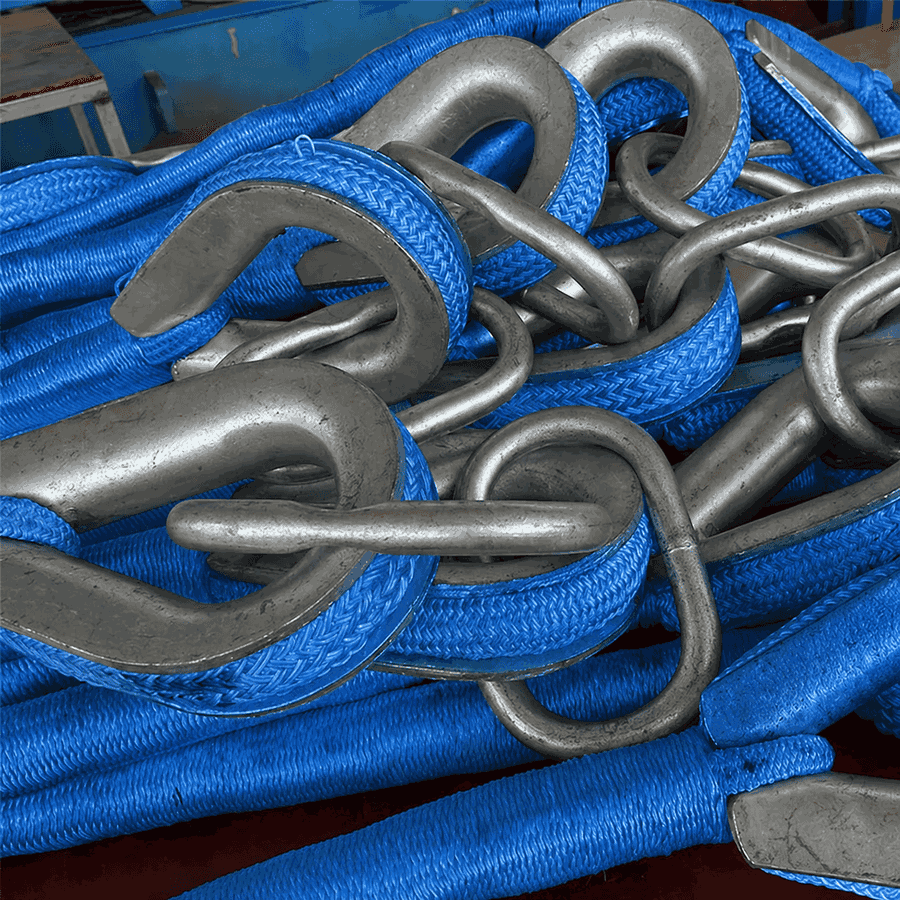
Heavy-duty synthetic mooring line splice and thimble.
The salvage activity requires uncompromising accuracy, and the mooring lines for recovery determine whether a vessel stays stable during a sudden spike of tension. Usually, recovery operations in high tension induce serious structural deformation in normal synthetic ropes without proper care.
Working under high salinity reduces tensile strength quickly, so operators must use sophisticated chemical coatings to protect the fibers. You mitigate these dangerous threats by upgrading your commercial fleet to strong cordage that meets all official safety recommendations.
Have you ever seen a heavy commercial ship drift aimlessly during a massive ocean storm? To select the appropriate dây neo for ships, mariners analyze precise breaking loads and evaluate the tested operating service life. Furthermore, you must understand the mooring lines definition in recovery to apply the correct gear properly.
Assess Minimum Breaking Load (MBL) Specifications
Operators have to compute the absolute tension limits before catastrophic deformation of the structure occurs during a mission. A capacity above the 48 metric ton MBL level ensures total failure avoidance during strong cross winds in a heavy offshore scenario.
SunHelm Marine states, “Mooring is the process of securing a ship to a fixed point.” Therefore, maritime professionals evaluate all weight limits carefully to maintain a safe working environment.
§ Dynamic Load Metrics
- Determine Vessel Tonnage of Displacement
- Measure Forces on Kinetic Waves
- Determine Minimum Tension Prerequisites
Evaluate Synthetic Fiber Material Compositions
Builders choose structural fibers designed to repel water completely, and these materials possess a higher tensile strength overall. The modern core architecture improvements provide the same towing strength as steel, and they avoid the dangerous risk of accumulating kinetic energy.
I remember a severe storm in the North Sea where our heavy towing bridles saved the entire vessel from crashing into the docks.
§ Core Synthetic Materials
- Install HMPE To Use in Astern Towing
- Use Polyamide Shock Pendants
- Incorporate Heavy-Duty Polyester Jackets
Verify International Regulatory Safety Compliance
Operators require dây thừng biển that carries official certification by independent third-party marine safety authorities across the world. Careful compliance remains essential so that your crews service lines according to strict standard regulations that avoid catastrophic business liabilities.
Virtue Marine warns, “Damage or wear on mooring lines is a common cause of failures.”
§ Mandatory Certification Checks
- Demand Meg4 Certification Documents
- View Factory Load Testing Statistics
- Confirm Osha Standards of the Sea
Analyze Environmental Salinity Resistance Metrics
Professionals find out what specific degradation metrics your area of operation requires to keep the fleet safe. The presence of high salinity in ocean waters necessitates a high level of chemical coating to suppress the harsh damage of salt crystals. Are your current synthetic ropes truly capable of handling the destructive salt crystals in shallow waters?
§ Salinity Defense Systems
- Use Marine Grade Polyurethanes
- Require New Flushing Procedures
- Inspect Center Fibre Crystallization
Determine Precise Dynamic Elongation Parameters
Captains compare the stretch profile accurately with the kinetic environment to ensure optimal performance during heavy lifting. Salvage maneuvers require inflexible towlines with a small elongation profile to convey raw pulling power safely without introducing deadly snap-back areas.
§ Stretch Tolerance Levels
- Seclude Zero-Stretch Hawser UHMWPE
- Add Hard Towing Bridles
- Measure Elasticity of Dynamic Loads
Review Laboratory UV Degradation Resistance
The intense radiation produced by the sun breaks molecular bonds in unprotected synthetic polymers very quickly. Buyers procure lines with special jackets tested to last many consecutive hours in the laboratory to assure a healthy operating life.
§ Solar Shielding Features
- Indicate UV-Stabilized Polyester Covers
- Monitor Cumulative Exposure to Sun
- Do Not Store Decks Long
Select Hardware-Compatible Diameter Specifications
An unmatched thickness of lines causes a direct failure in the standard deck hardware during a towing job. The operators align the large outer diameter lines with the premeditated fairleads and structure mooring chocks of the vessel accurately.
§ Hardware Compatibility Sizing
- Measure Chock Dimensions with Internal
- Define Limitations of Bitt Capacity
- Avoid Over-Friction of Hardware
Examine Outer Protective Jacket Construction
Rough edges of steel eliminate naked Squamish cores on the spot because they lack any protective synthetic covers. You cover the load carrying center tightly to repel unrelenting mechanical chafing when unloading and loading vessels at the busy docks.
§ Outer Cover Engineering
- Focus On Tight Jacket Designs
- Check Cover-To-Core Slip Rates
- Strengthen Contacts of High Friction
Calculate Specific Gravity and Buoyancy
Deep water recovery requires strong lines which remain highly visible on the surface of the dark ocean. The choice of fibers ensures the towing of bridal floats, and this choice makes the risk of serious entanglement in the propeller completely neutral.
§ Water Flotation Dynamics
- Check Good Buoyancy Ratings
- Use No Heavy Sinking Synthetics
- Keep Surface Profiles Visible
Inspect Heavy-Duty Termination Hardware Integrities
A perfect line breaks at a faulty terminus point with an instantaneous break under massive pressure. Buyers demand heavy-duty tubular steel thimbles firmly fixed by hand-tucked eye splices to spread hardware friction over a greater area.
Freeworker notes, “The minimum breaking load indicates the force at which the material fails.”
§ Termination Point Hardware
- Install Thimbles of Reinforced Metal
- Audit Factory Splice Settings
- Oil Up Metal Hardware Joins
| Fiber / Material | Dung lượng MBL | Trọng lượng riêng (SG) | Hồ sơ kéo dài | UV & Salinity Metrics |
| UHMWPE 12 sợi | >48.0 MT | 0,97 (Số thực) | <4.0% (Zero-Stretch) | Max / ISO-4892-2 UV |
| Polyamide (Nylon) | 35.5 MT | 1.14 (Bồn rửa) | 20.0% – 30.0% | Mod UV / PU Coat Req. |
| PET có độ bền cao | 42.0 MT | 1.38 (Bồn rửa) | 12.0% – 15.0% | 1000-hr UV / Mod Salinity |
| Polypropylen (PP) | 22.5 MT | 0.91 (High Float) | 18.0% – 22.0% | Low UV / High Salinity |
| Aramid Composite | 55.0 MT | 1.44 (Bồn rửa) | 1.5% – 2.0% | High Temp / Shield Req. |
Technical Comparison: Mooring Lines for Recovery!
Defining Mooring Lines in Recovery and Towing!
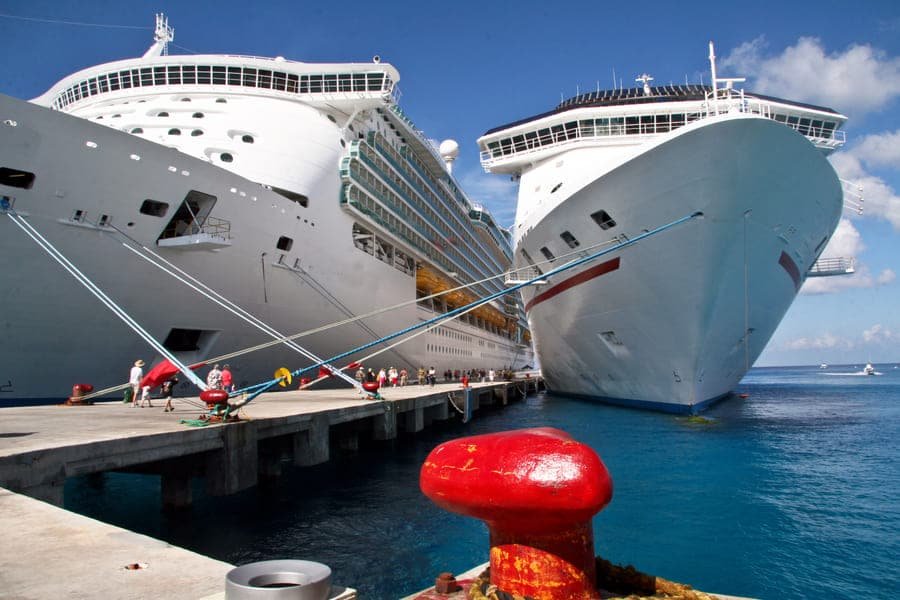
Mariners should know the precise working mechanics of marine cordage to perform their demanding jobs efficiently. What are the ropes on a ship called during a rescue? In classifying them, mariners distinguish between hawsers, towlines, and the general mooring lines arrangement based on applications of their dynamic loads.
Technical Parameters of Marine Cordage
- Minimum Breaking Load (MBL): The metric tons of force needed to separate the line completely.
- Giới hạn tải trọng làm việc (WLL): The saturated operating weight, which normally sits at a fraction of the full breaking load.
- Elongation: This percentage measures how much a rope extends before breaking entirely.
Mooring Lines Definition in Recovery
The actual definition involves unstretched types of synthetic or dây cáp thép specifically designed to retrieve vessels safely. Moreover, these tools stabilize damaged ships in response to unpredictable hydrodynamic forces in the wild ocean.
ôi Salvage Application Types
- Identify Emergency Towing Tools
- Classify Vessel Retrieval Equipment
Analyzing High-Salinity Environmental Degradation
Ocean saltwater destroys synthetic fibers rapidly without proper protective barriers in place during long missions. Therefore, engineers coat the ropes with specialized chemicals to prevent microscopic salt crystals from shredding the vital inner core. During my early years as a deckhand, a cheap dây nilon snapped near me, and I never forgot that terrifying sound.
ôi Degradation Defense Systems
- Apply Advanced Chemical Coatings
- Establish Routine Freshwater Washes
Verifying Regulatory Operational Safety Compliance
Captains demand strict adherence to international maritime rules to protect their crews and their valuable cargo. Mazzella Companies suggests, “The Working Load Limit is a guideline for the maximum allowable capacity.”
ôi Mandatory Certification Checks
- Review Annual Safety Audits
- Validate Independent Testing Results
Defining Types of Mooring Lines for Recovery Operations!
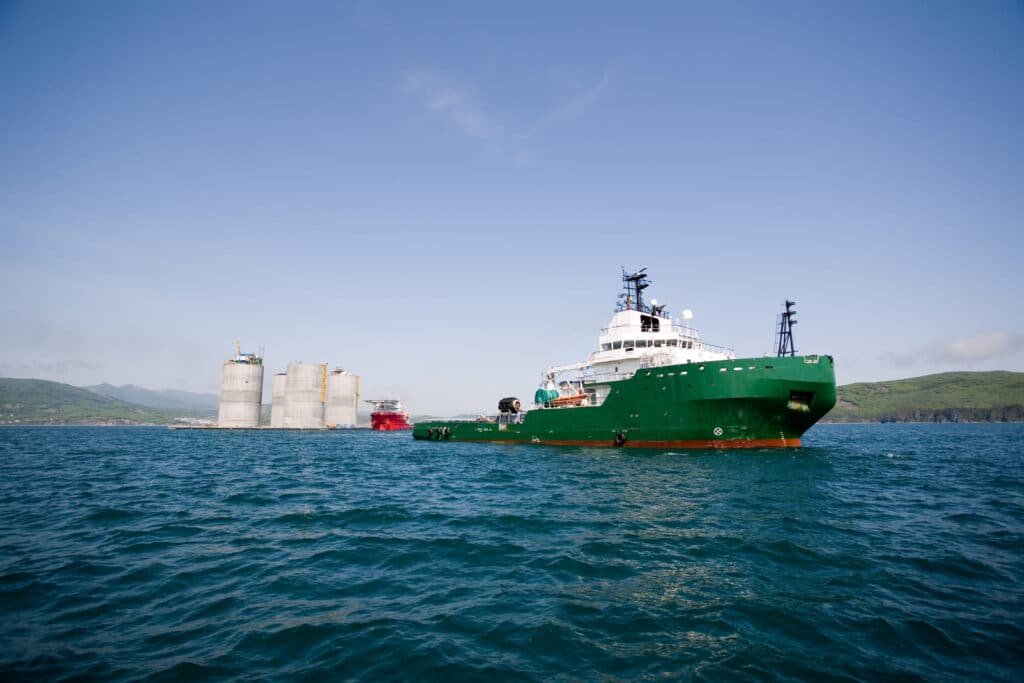
Several cases of salvages determine certain chemical and structural cordage compositions for the working crew. Due to the deep available waters, operators cannot use the generic dây neo to recover deep water vessels.
You put incredibly engineered synthetic strands into action to warrant absolute maritime operational velocity when undertaking high-tension operations. Specifically, types of mooring lines for ships vary greatly depending on the exact nature of the maritime emergency.
UHMWPE(Ultra-High-Molecular-Weight Polyethylene) Lines
The strong lines with special coating upgrades offer massive towing power equivalent to heavy steel cables. These special ropes control a massive load without any structural deformation during a tense operation. Furthermore, they serve as excellent examples of mooring lines in recovery because of their incredible durability.
· Core Application Metrics
- Require Zero Level Of Water Absorption
- Have Hard Zero Stretch Profiles
- Safely Fly Above Propeller Areas
Polyamide (Nylon) Shock Absorption Ropes
Polyamide fibers seamlessly absorb harsh kinetic waves during a violent storm at sea. Operators utilize these stiff synthetic pendants to reduce extreme tensions on the structures during unpredictable weather at risky ports.
· Kinetic Handling Capabilities
- Soak Up Extreme Wave Energy
- Need Periodic Freshwater Flushing
- Reduce Tension Of Harmful Bow Hardware
High-Tenacity Polyester Mooring Ropes
Tenacity polyester remains entirely impervious to destructive mechanical chafes on the ship deck. Engineers count on these stiff rigid lines because they have advanced resistance tested under rigid laboratory safety standards.
· Static Deployment Features
- Keep High Heavy Static Loads
- Withstand Mechanical Chafing Of Surfaces
- Offer Outstanding Lab Shielding
Polypropylene Floating Salvage Lines
Polypropylene polymers tend to move to the surface of the water by default since their specific gravity remains low. Salvage crews choose this low-weight cordage to aid in temporary maneuvering and to indicate dangers below the surface. We once struggled to pull a grounded barge free, but upgrading to modern synthetic fibers made the job incredibly smooth.
· Buoyancy and Handling
- Have Good Positive Buoyancy Ratings
- Resist Factors Of Chemical Degradation
- Exceptionally Have Light Handling
Aramid Heat-Resistant Recovery Ropes
Aramid fibres withstand extreme thermal and friction spikes immediately during a fast-paced extraction mission. Industrial operators require these special rigid lines during the navigation of heavy cargo around hot mechanical winches.
· Thermal Resistance Specs
- Withstand Severe Mechanical Friction
- Have Extremely Low Stretch Tension
- Need Special Protective Jacketing
Mixed-Fiber Composite Towing Pendants
Manufacturers successfully combine sturdy jackets with high-tech cores in unique composite ropes. This two-fiber design provides high abrasion resistance with minimal overall structural weight dimensions to achieve fast manual emergency missions.
· Architectural Advantages
- Integrate Advantages of Two Synthetic Fibers
- Decrease Total Manual Weight of Deployment
- Improve External Hardware Protection Against Chafe
Galvanized Steel Wire Ropes
Galvanized steel offers pure unyielding mechanical pulling force without any difficulties during a job. Heavy salvage tugs use such inflexible metal cables to pull heavily grounded commercial ships out of dense ocean mud banks. Do you know the exact minimum tension prerequisites for your specific daily maritime operations?
· Mechanical Pulling Strength
- Provide Highest Raw Unyielding Strength
- Need Heavy Specialized Mechanical Winches
- Require Rigid Operational Lubrication Schedules
Double-Braided Synthetic Dock Lines
Workers construct doubles where one braid sits securely inside a second sturdy braid. Maritime workers use these adjustable lines to execute an accurate tender mooring process in line with proper operational protocols.
· Flexibility and Distribution
- Maximize Flex Deck Handling Properties
- Evenly Distribute Hardware Tension Loads
- Eliminate Internal Herniation-Structural Cores
HMPE Mooring Lines Arrangement
Dây thừng HMPE form the main setup of major international offshore salvage activities globally. They comply with strict requirements and work effectively within a strict local maritime safety policy.
ROPENET advises, “If in doubt about the condition of the mooring line, discard it.”
· Regulatory Compliance Factors
- Follow Strict International Guidelines
- Remove Serious Deck Snaps-Back Areas
- Secure Commercial Ships In Large Numbers
Plasma 12-Strand Synthetic Lines
Engineers recrystallize plasma fibers in a special process that increases the molecular bonds within the core. Such engineered polymers provide high fatigue strength in repeated heavy lifting cycles at busy international ports.
· Fatigue Management
- Resist Cyclic Hardware Wear Out
- Contain Recrystallized Structures Of Synthetic Polymers
- Deliver Large-Scale Heavy Lifts
LCP (Liquid Crystal Polymer) Ropes
The creep resistance in liquid crystal polymers remains unsurpassed at a constant high strain. Deep-sea operators choose LCP fibers to ensure no permanent extension of length occurs during prolonged offshore standby positioning.
· Deep-Sea Stabilization
- Avoid Creep of Structural Operation Length
- Stabilize Deep-Sea Submerged Retrieval Equipment
- Have Complete Dimensional Operation Stability
Dyneema Core Marine Towing Hawsers
Dyneema represents a superior quality of ultra-high level polyethylene lines of molecular weight. These highly sophisticated synthetic hawser types ensure the safety of ultra-large crude carriers in highly volatile open ocean currents.
· High-Tension Control
- Rent Very Large Oceans Vessels
- Keep Tension Under Absolute Constant Control
- Offer High Quality Offshore Loading Services
Material Comparison: HMPE vs. Traditional Synthetics!
Mariners evaluate different materials closely to ensure they deploy the correct tool for the job. HMPE offers maximum strength equivalent to steel, zero water absorption, and superior chafe resistance compared to basic nylon.
Conversely, nylon provides high stretch capacity but suffers from high water absorption and only moderate overall strength. According to Viper WRL, “One should never underestimate the value of a well-maintained mooring line, which can protect your boat in even the toughest conditions.”
| Tính năng | Vật liệu UHMWPE | Nylon | Polyester |
| Sức mạnh so với trọng lượng | Maximum (Equivalent to Steel) | Vừa phải | Vừa phải |
| Stretch / Elongation | Low (Under 4%) | High (Up to 30%) | Low (12-15%) |
| Sự hấp thụ nước | Zero (Floats on water) | Cao (Bồn rửa) | Low (Sinks) |
| Chafe Resistance | Superior (Often jacketed) | Vừa phải | Cao |
Core Components of Mooring Lines for Recovery!
Detailed close-up of Duracordix maritime mooring line components.
The reliable towing setup requires a carefully developed maritime configuration to succeed safely. Knowing about these co-integrated structural components avoids terminal equipment malfunction in the case of an extreme operation. Marine engineers enforce explicit specifications of every segment to ensure complete stability in high-tension offshore salvage operations today.
Load-Bearing Core Architecture
The inner synthetic core takes up the major mechanical tension during a pull. Companies rely on durable yarns and never compromise the breaking load needed to stabilize heavy commercial offshore vessels.
High-Tenacity Protective Jacket
External wrap covers shield the load-bearing center from extreme external friction effectively. Engineers lay down a tightly woven fabric to stop harsh mechanical abrasion of fairleads in continuous marine salvage deployments.
Tubular Steel Thimbles
Workers cover the synthetic eye loop with heavy-duty metal inserts that cushion against pure hardware friction. Operators install the galvanized steel tubular thimbles to spread severe mechanical loads uniformly along the critical termination point. When I first managed a salvage crew, learning to inspect the splice tapers properly became my top daily priority.
Hand-Tucked Spliced Eyes
The spliced loops allow easy attachment to terminals without affecting the structural strength of the raw materials. Riggers make specialized structural splices to ensure absolute tensile integrity when linking heavy towing hawsers to main vessel bollards.
Polyurethane Chafe Guards
Sacrificial sleeves eliminate the high surface friction at critical contact points of the hardware. Crews cover the lines with thick cylindrical guards to prevent catastrophic melting of the fibers due to high heat.
Anti-Snap-Back Arrestor Cores
Internal safety ribbons cancel the fatal recoil velocity during a disastrous line failure. This special parallel core delivers the separated hawser to the deck immediately, and it eliminates killing blunt force crew injuries. Why do so many marine professionals still ignore the dangerous reality of unpredictable snap-back zones? Get the answer here in this short clip.
Kinetic Energy Mooring Pendants
Crews attach rigid towing bridles to main vessel hardware using shock-absorbing extensions. Mariners lay out heavy nylon harnesses to absorb huge impacts of hydrodynamic waves and prevent stress transfer to deck cleats.
Marine Galvanized Bow Shackles
Heavy metal connectors join the synthetic eye splices to the steel towing hardware safely. Salvage teams stipulate forged alloy steel shackles with an exact working load capacity to ensure perfect operational security.
Fairlead Roller Contact Zones
The rope lines touching the guiding hardware of the ship experience the highest friction levels. Engineers add marine grade silicone lubricants to these areas so that environmental damage through thermal degradation minimizes significantly. Furthermore, proper lubrication extends the life of mooring lines considerably.
Synthetic Mooring Tail Extensions
Elastically needed structural additions make rigid main towlines much more flexible and manageable. Port authorities incorporate doubled-braided composite tails which prove very effective during high tidal changes in shallow trading harbors.
Polypropylene Messenger Line Attachments
Thin handling ropes enable the crews to transport heavy towing hawsers among different ships. Deck hands use floating lines to transport the main heavy recovery gear through perilous open ocean holes safely.
Bitter End Deck Terminations
Technicians attach the last section of the tail to the main line on the operating winch drum. They apply reinforced whipping to the final section to prevent core slip under maximum structural dynamic tension.
Core-to-Cover Bonding Adhesives
Special marine glues bond the protective outer jacket directly to the inner load-bearing center. Manufacturers use high-performance resins to eliminate hazardous bunching of the cover during a short offshore retrieval operation.
Internal Identification Marker Tapes
Manufacturers embed verifiable tracking ribbons inside the main synthetic core for tracking purposes. Inspectors remove these special polymer tapes to confirm the accuracy of production dates and compliance with manufacturing batch numbers.
Spliced Eye Protective Whipping
External tapers of tight wrappings fasten the vital splice tapers securely so they never unravel. Riggers roll tarred nylon whipping over the area to stiffen the mechanical transition during heavy cyclical loads.
Splice Taper Transition Zones
The gradient zone integrating the spliced eye back into the main rope must remain absolutely accurate. Engineers design a gradual reduction taper to get rid of stress fractures when heavy forces apply during sideways towing.
Encapsulation Weatherproofing Coatings
External chemical coatings protect the rope fibers against extreme microscopic decomposition in bad weather. Factories use specialized marine polyurethane baths to prevent the destructive accumulation of salt crystals along the entire hawser length.
Hardware Load Connection Points
The maximum possible kinetic transfer forces appear directly on the marked rope junctions. Operators strengthen these special contact spots with secondary jacketing to endure high-speed frictional spikes in fast extractions.
High-Visibility Tracer Yarns
Continuous bright fibers carry all the way around the exterior rope jacket for safety. Safety coordinators use these optical indicators to quickly identify hazardous rotational twisting in the active towing bridle.
Essential Applications of Mooring Lines Recovery!
Tugboat towing large vessel with thick rope.
Any recovery work requires tight line handling requirements from the dedicated crew. The operators install very accurate engineered systems in particular challenging sea environments.
Precise structural arrangements prevent unpredictable disastrous mechanical breakdowns when retrieving vital vessels in the oceans around the world. Knowing what are the mooring lines for your recovery operations ensures success. Furthermore, understanding recovery lines mooring techniques saves lives.
Astern Towing Operations
Operators need uncompromising zero-stretch synthetic hawsers during difficult astern towing missions. They use strong configurations to control a high kinetic force safely under unpredictable open-sea swells when delivering commercial vessels.
§ Core Astern Protocols
- Install HMPE Special Pennants of Towing
- Keep Any Zero Stretch Measures
Tender Towing Bridles
The weighing of the structure in heavy tensile towing requires the even distribution of heavy loads. Engineers deploy thick multi-strand polyester blends to stop devastating shock-loading impacts on delicate bow cleats during coastal extractions.
§ Bridle Distribution Mechanics
- Raise Loads on a Number of Cleats
- Make Use of Sturdy Polyester Fibers
Stranded Vessel Retrieval
The retrieving of grounded vessels involves a huge amount of raw pulling strength. Salvage crews use stiff primary towlines with flexible nylon shock pendants to form an enormous pulling force against ocean muds.
§ Kinetic Extraction Dynamics
- Locate Kinetic and Crude Strength
- Attach Nylon Shock Pendant Links
Deep-Water Salvage Stabilization
Deep-water stabilization requires continuous tension limits strictly regulated by the authorities. Riggers require compatible cordage systems capable of supporting gigantic submerged industrial structures safely at very deep ocean trenches.
§ Submerged Control Systems
- Keep Up Stringent Continuous Tension Limits
- Install Tested Meg4 Compatible Lines
High-Salinity Harbor Deployments
The operations occurring in high-salinity harbor environments kill unprotected fibers quickly. Maritime crews specify special polyurethane-coated ropes to overcome abrasive microscopic salt crystals during modern long salvage missions.
§ Chemical Degradation Defenses
- Coat With Marine Polyurethane Chemicals
- Block Microscopic Salt Crystal Abrasion
Inland Waterway Barge Recovery
Travelling in the shallow draft registered in local inland waterways entails highly buoyant devices. Deckhands throw floating polypropylene lines to safely avoid unsafe bottom snagging around busy commercial ship locks.
§ Flotation Safety Maneuvers
- Install Positive Buoyancy Floating Lines
- Avoid Shallow Draft Bottom Snagging
Severe Storm Wharf Securing
The safety of cargo ships in violent weather requires the utmost mechanical resilience. Port authorities use UV resistance tested on continuous use to anchor heavy freighters in offshore terminals today.
§ Weather Mitigation Tactics
- Anchor Large Commercial Cargo Freighters
- Require All Iso Tested UV Jackets
Extreme Congestion Port Maneuvers
Captains highly need responsive double-braided dock lines to make quick docking maneuvers safely given acute supply chain bottlenecks. Efficient mooring recovery lines allow ships to navigate tight spaces without causing costly accidents.
§ Confined Space Navigation
- Perform Fast Accuracy Docking Changes
- Employ Twisted Or Stranded Lines Of Response
How Long Should Mooring Lines Be?
Getting the size of your equipment right helps to avoid disastrous load failures.
- Standard Mooring: This length should measure 1.5 to 2 times the overall size of the vessel.
- Offshore Towing: Towlines frequently exceed 500 meters in length so the towed vessel follows wave crests freely without disturbance.
- Storm Conditions: You must double the normal length to allow sufficient catenary, which serves as a natural shock-absorber.
Maintenance and Storage Tips for Mooring Recovery Lines!
Inspecting Duracordix mooring ropes and logbook.
Any failure to maintain your equipment surely makes you fall into danger eventually. You need to enforce stringent inspection measures to protect the crew and the vessel.
- Freshwater Flushing: Salt crystals act like tiny razors inside the rope threads. When exposed to high salinity, flush all mooring lines for recovery with fresh water immediately.
- Visual Inspections: Observe herniated fibers, melted glazing indicating interior friction heat, and localized loss of diameter closely.
- Proper Storage: Keep all samples of mooring lines in dry and well-ventilated lockers raised safely above the wet deck.
- Logbook Tracking: Record the actual hours of high-tension application accurately. You must plot the degradation chart of manufacturer load limits vigorously to ensure safety.
Phần kết luận
In harsh maritime towing conditions, you must invest in dependable equipment. Upgrading synthetic mooring lines improves recovery operations and provides an incredible positive impact on safety measures. Port authorities enforce strict rules about minimum breaking loads. Choose our engineered mooring lines for recovery solutions at Duracordix to protect your hardworking crew and drive successful salvage operations today.
Technical FAQs for Mooring Lines in Recovery!
What Is The Ideal Material For High-Tension Recovery Towing?
HMPE remains the most commonly used material in the industry because it possesses great strength, low elongation, and low weight.
How Does Salinity Affect Nylon Mooring Lines?
Saturation in salt water decreases the tensile strength of nylon significantly and increases abrasive wear on the inside.
What Does MBL Stand For In Marine Cordage?
MBL means the minimum breaking load, which represents the minimum metric tonnage at which the rope completely breaks.
How Often Should We Inspect Recovery Lines?
Crews must do a physical inspection of the lines at least once prior to each deployment and monthly thereafter.
What Are The Ropes On A Ship Called During Salvage?
Operators refer to them as towlines, hawsers, pennants, or recovery bridles depending entirely on the specific maritime application.
What Is A Snap-Back Zone?
This is an extremely dangerous compartment where a broken dây tổng hợp strikes back rapidly with lethal blunt force trauma.
Can I Use Dock Lines For Vessel Recovery?
No, because standard dock lines do not have the required breaking loads and anti-abrasion coats required in high-tension salvage.
Why Do Towlines Need Chafe Guards?
The chafe guards ensure the uncooked friction of fairleads does not melt or cut the synthetic rope fibers quickly.
What Is The Catenary Effect In Towing?
This refers to the natural drop of a long towline in the water to absorb shock-loading caused by ocean swells.
Where Can I Find A Mooring Lines In Recovery PDF?
You can find safety practices at the OCIMF and psychological worksheets at various mental health resource portals online.
How Do UV Rays Damage Mooring Ropes?
Ultraviolet radiation decomposes synthetic polymers and swiftly destroys the tensile strength of the rope through severe molecular bond breakages.
What Is A Towing Bridle?
A towing bridle involves a V-shaped loading arrangement with the towing load spread among several strong points on the bow.
Why Do HMPE Ropes Float?
The specific gravity of HMPE is 0.97, which sits lesser than water, making it suitable to prevent propeller entangling.
When Should I Retire A Mooring Line?
You must stop and label lines when you find cut strands, thick glazing, chemical damage, or exceeded working hours.
Giới thiệu về tác giả

Moses Xu
Phó Chủ tịch kiêm Giám đốc Tiếp thị Kỹ thuật
Với hơn 10 năm kinh nghiệm thực tiễn trong công nghệ sợi tổng hợp hiệu suất cao, tôi hỗ trợ các khách hàng toàn cầu—từ các đội đua chuyên nghiệp đến các công ty kỹ thuật hàng hải—tạo ra các giải pháp sợi độc đáo và đặc biệt bằng cách sử dụng các loại sợi UHMWPE, Kevlar và Nylon hiệu suất cao, v.v. Hãy để chúng tôi giúp bạn trong dự án tiếp theo và cùng nhau giải quyết mọi khó khăn của bạn.
 Tiếng Việt
  English
  Español
  Deutsch
  Français
  العربية
  한국어
한국어  Русский
  Ελληνικά
  Italiano
  Português
  日本語
日本語  Türkçe
  简体中文
简体中文  Suomi
Suomi  Svenska