Introduction
Which synthetic fiber keeps your heavy asset in place during a Category 3 storm generating 130-knot winds? Choosing maritime equipment is not a matter of guess work, but cold hard data. The HMPE vs Nylon mooring rope dialogue is a game changer in terms of operational safety limits. We outline the specific performance metrics, including megapascal thresholds and other important OCIMF MEG4 standards that port engineers require from reliable suppliers.
Selecting the Perfect Deck Line for Your Vessel!
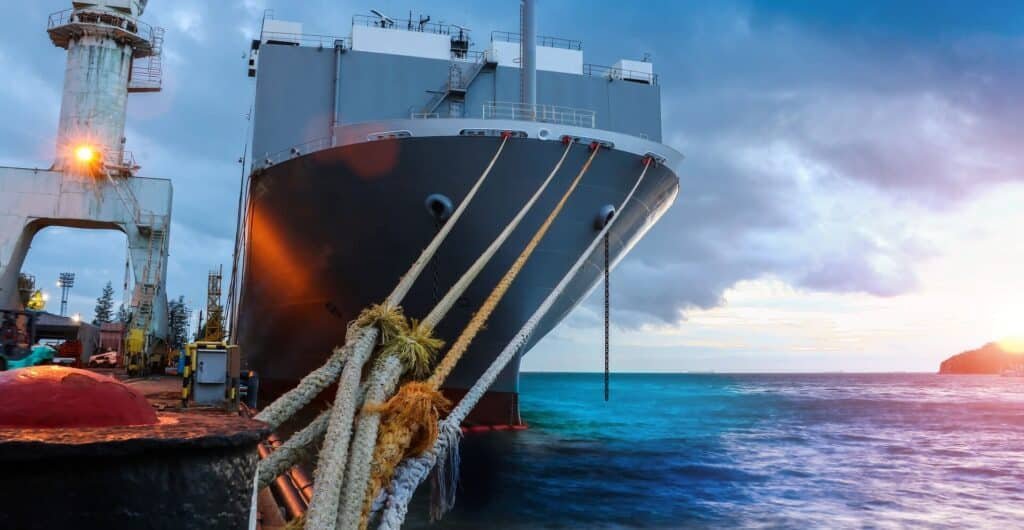
Specifying the right marine linesinvolves assessing actual vessel displacement versus dynamic windage areas. When port operators fail to consider physical material properties and elastic modulus ratings, they risk catastrophic hardware failures. You have to get the elastic properties of those fibers set correctly for your docking environment and peak surge kinetics.
Vessel Tonnage And Load Limits
Deck officers derive base loads using mean deadweight tonnage (DWT) and accurate coefficients for environmental drag. Apply this formula to get your exact kgf of line design break force kN required for you to evade the other end. Have you performed a recent calculation of your hull wind profile to ensure the safety of your crew?
- Small Vessels: Boats below 5,000 tonnes utilize 2.5-inch diameter lines with a minimum breaking threshold of 350 kN.
- Midsize Cargo: 5,000 to 15,000 tonne ships with working lines pushing over 800 kN use 3-inch rope.
- Offshore Platforms: Heavy platforms over 15,000 tonnes can require minimum diameters of up to 3.5 inches with holding power exceeding 1,500+ kN.
Environmental Degradation Factors
Poorer synthetic materials break down quickly in harsh ocean environments at the molecular level. You get cheap fibers in a 50k DWT tanker restoring to powder from basic elements. OCIMF MEG4 guidelines state, “environmental fatigue and wear significantly reduce residual line strength.”
- Ultraviolet Light: 280-315 nm UVB radiation from the direct tropical sun bombards polymers to break unshielded carbon-carbon chemical bonds during over 300 hours of operation.
- Saltwater Friction: Ocean water has 35 parts per thousand of jagged salt crystals that ricochet and get embedded directly inside the core and sever filaments mechanically from within.
- Chemical Spills: Aggressive petroleum products and acidic deck cleaners dissolve specific polymer types upon contact, reducing tensile limits by 40% immediately.
Material Breakdown: What’s Inside Your Mooring Rope?
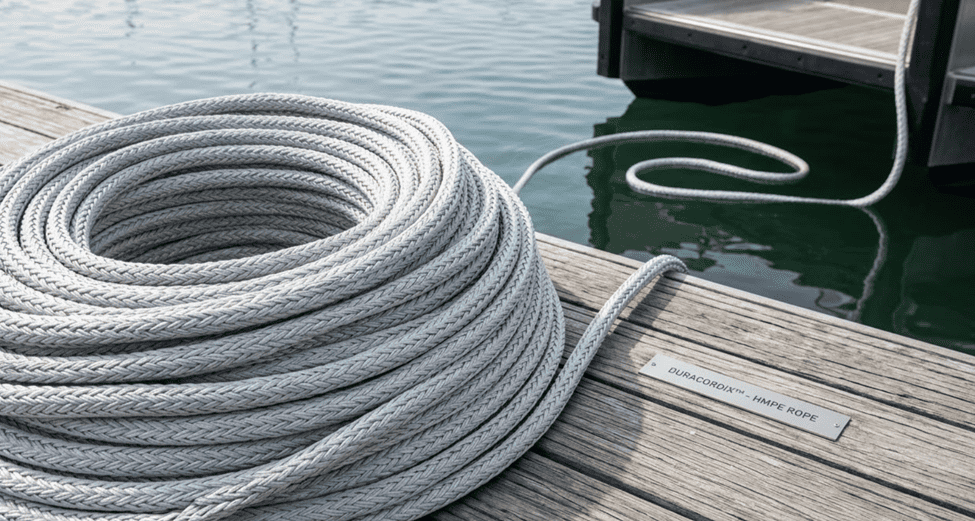
Modern deck hardware is made from four basic petrochemical building blocks. Each polymer behaves completely differently mechanically and displays unique yield points when subjected to enormous megapascal stress.
HMPE rope
HMPE is made from the same ultra-high molecular weight structures that provide extreme strength at a fraction of traditional weight. Manufacturers also orient polymer chains in a linear way producing incredible 35-40 grams/denier breaking limits.
- Weight Ratio: A pure HMPE rope is 700% lighter than traditional 6×36 class steel wire, yet has the same breaking force.
- Stretch Capacity: Less than 2% elongation at 30% of working load, it behaves very much like a stiff steel bar.
- Water Interaction: With a specific gravity of 0.97, the material floats as if made for 1.025 density saltwater without absorbing a drop.
Nylon mooring rope
Nylon 6 and Nylon 6.6 are the best kinetic energy absorbers of all standard maritime fibers available in the market. It is this low modulus 3 GPa elasticity that provides protection to ships docking in rough high surge waters, preventing strain ripping steel cleats through the deck.
- Shock Absorption: Under extreme 100% tension levels, nylon mooring rope stretches an amazing 40% before structural rupture.
- Working Elongation: The line enjoys a 10% to 20% stretch between wind of approximately 15 knots during docking maneuvers.
- Water Drawback: This hydrophilic fiber physically pulls in water, swelling its diameter by 5% and losing 15% of its 8.5 g/d dry strength.
3 strand polyester rope
The ultimate dimensional stabilizer for everyday commercial shipping operations is a 3-strand polyester rope. This crystalline polymer simply avoids water altogether, retaining the same high melting point of 260°C and its exact factory shape.
- Minimal Stretch: The fibers can only stretch up to 10% under load, which safely falls in the middle between stiff HMPE and overly-dynamic Nylon.
- UV Resistance: Compared to unprotected HMPE, polyester is a more effective deflection of ultraviolet radiation degradation and virtually loses no tenacity after 12 months.
- Handling Feel: The rope maintains good hand with a moisture regain rate of only 0.4%, making it also resist brutal stiffness after long-time saltwater exposure.
Polypropylene (PP)
Crews use polypropylene when they require low cost, floating secondary lines with a specific gravity of 0.91. This isotactic material is thermally abominable, but excels at certain temporary holding tasks.
- Positive Buoyancy: PP always floats above the 1.025 specific gravity of seawater and prevents that all too catastrophic propeller entanglement.
- Cost Efficiency: Procurement buyers pay approximately 60% less for PP than premium SK78 or SK99 HMPE fiber grades.
- UV Weakness: Sunlight triggers an accelerated photo-oxidation which obliterates unshielded PP filaments at a pace that causes loss of breaking strength by 50% in only a couple of seasons.
| Feature | HMPE (Ultra-High Molecular Weight) | Nylon 6 / 6.6 (Polyamide) |
| Tensile Tenacity | 35-40 g/denier | 8.5 g/denier (Dry) |
| Specific Gravity | 0.97 (Floating) | 1.14 (Sinking) |
| Elastic Modulus | High (Steel-like) | Low (3 GPa) |
| Elongation @ 30% Load | < 2% | 10% – 20% |
| Breaking Elongation | 3.5% – 4% | 40% |
| Moisture Absorption | 0% (Hydrophobic) | 5% (Hydrophilic) |
| Wet Strength Retention | 100% | 85% |
Technical Specification Comparison: HMPE vs. Nylon Mooring Systems!
HMPE vs Nylon mooring rope: Which Fiber Wins on the Water?
The discussion regarding which fiber to choose is the topic of many maritime procurement meetings and naval architecture boards around the world. This is where the two materials become diametric opposites in their mechanical role on the deck, and that rigid operational discipline must be maintained. As claimed by Access Ropes, dynamic rope cushions falls while static rope prevents bounce.
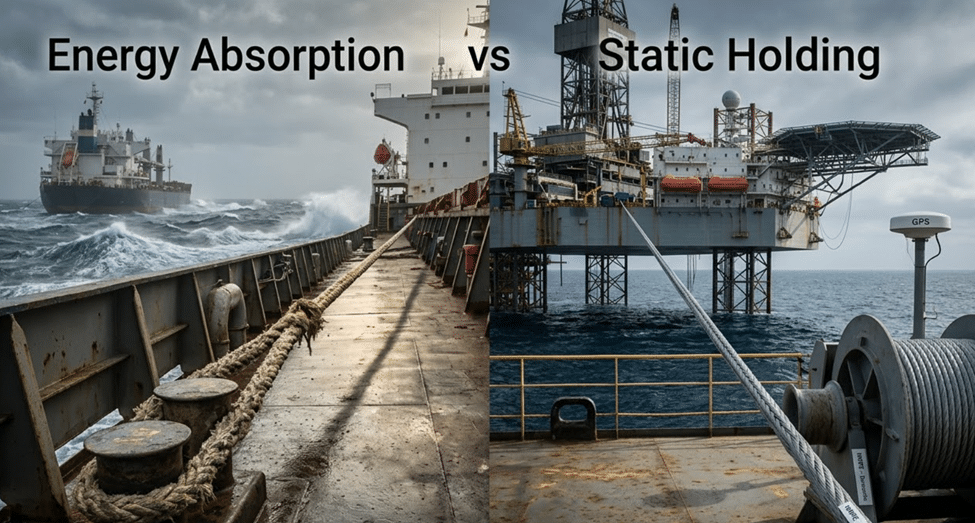
Energy Absorption vs. Static Holding
Nylon is a giant shock absorber for vessels dealing with big 4-meter swells. HMPE behaves like solid steel, delivering huge kinetic wave energy straight to deck cleats without dissipating the force.
- Scenario 1: A 15,000-tonne cargo boat anchored at a high-surge port during a 50-knot storm needs the 20% stretch of nylon to dissipate violent kinetic energy.
- Scenario 2: An offshore rig must hold precise GPS coordinates for drilling. The crew uses HMPE to lock the platform precisely in place with zero stretch.
Handling And Deck Operations
Crew safety just got a big upgrade when you replace heavy lines pulling 5 kg/m. Port workers worldwide experience chronic musculoskeletal back injuries due to heavy lifting. Duracordix engineers specific load ratios, from core to jacket, to minimize these common injuries.
- Weight Differential: One deckhand can easily carry 50 meters of 40mm HMPE; three deckhands can barely drag around 50 meters of soaking, water-logged nylon.
- Recoil Danger: When HMPE breaks, it instantly “catches” its own kinetic energy and reduces deadly snap-back velocity by 80%.
- Storage Footprint: The low profile of HMPE needs 40% smaller winch drums and frees up huge amounts of valuable steel deck space.
The Case for Polyester: Supreme Shape Retention!
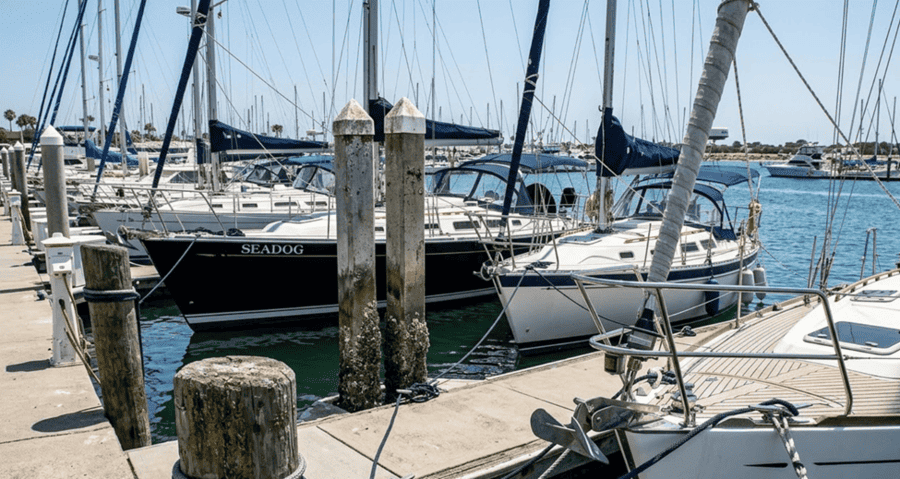
Polyester continues to be the workhorse for most everyday commercial fleets and recreational shipping sectors. The fiber does not sense environmental temperature shifts inducing more linear, predictable load bearing day to day.
Wet Performance Consistency
How well do you know the wet-strength depletion of your existing deck lines? Nylon loses huge amounts of strength when it gets wet, while polyester retains 100% of its factory-rated tensile strength no matter how long it’s submerged.
- Zero Swelling: Hydrophobic fibers repel water at the molecular level allowing line to slide through cast-iron fairleads effortlessly.
- Weight Stability: Regardless if the line is bone dry or pulled straight off the ocean floor, crew members will lift the same physical weight.
- Rot Prevention: Tight braiding of the fibers prevents corrosive moisture from reaching the interior core and causing mildew or bacterial rot.
Optimal Yacht Applications
For the typical sailing yacht constantly exposed to marina abuse, double braid polyester is still the best engineered choice. The material offers just enough stretch to shield fiberglass cleats from harmful shear forces.
- 30-55 Foot Cruisers: Polyester has the best balance of strength at 8.5g/d and give to ride through normal harbor chop.
- Constant UV Exposure: The stable molecular fibers are incurred to 5+ years in fierce, baking UV in tropical marina slips.
- Abrasion Resistance: The tight-weave outer jacket deals with rough, barnacle-studded concrete pilings without shredding into useless fuzz.
Polypropylene Basics: When to Use Floating Lines?
Fleet managers buy PP lines only for defined short-term deployments, heaving lines and inland tow operations. Never use unprotected PP for permanent, heavy-duty or load-bearing projects or in applications experiencing high-cycle friction.
Floating Characteristics
Watermen use PP mainly because the stuff won’t sink below the waterline with 0.91 density. This particular physical property saves lives and prevents catastrophic mechanical failures on little tugs.
- Propeller Safety: The floating lines cannot reach spinning brass boat propellers, thus preventing $20,000 dry-dock shaft repairs.
- Retrieval Speed: Deckhands catch flow lines from the water surface in a flash with standard aluminum boat hooks.
- Tow Line Applications: 12mm PP are favorite for small harbor tugs to transfer the heavy messenger lines in double gear between boats.
The Degradation Problem
Polypropylene undergoes extreme molecular chain fragmentation in environmental conditions of over 150°C or high UV index. You have to change out these lines every 12 months, otherwise you risk a sudden, devastating low-tension snap.
- UV Brittleness: Fibers oxidize and whiten quickly and snap cleanly at only 6 months of deep sun exposure.
- Friction Melting: Localized friction heat at 165°C will begin to melt the internal plastic core during rapid winch operation.
- Memory Coiling: Stiff polymer material holds frustrating, hazardous kinks that forcefully jam inside narrow deck chocks with rapid deployment.
Mooring Lines Arrangement: Securing Your Vessel Safely!
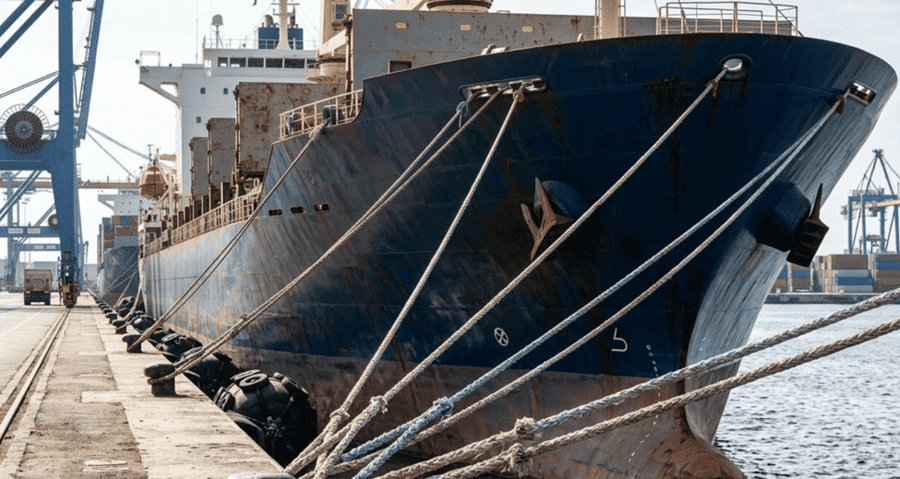
Even 4-knot tidal changes must not allow large steel ships to leave the concrete quay. You need to share multi-ton forces accustomedly sanctioned 28 measurements separation, using accurate geometry.
Standard Configuration Angles
Specific angles of the lines in relation to the centerline of the ship are needed from port authorities to properly secure commercial ships. Every particular angle battles with a completely different environmental force that is fighting over the windage area of the hull.
- Head Lines: These lines pull the bow forward into the dock structure at no more than 15-degree angles for optimal longitudinal restraint.
- Stern Lines: These lines are attached to the rear of the ship to prevent it from drifting away as well.
- Spring Lines: These essential diagonal lines lay close to parallel to the dock and help prevent the vessel from crashing forward or backward.
- Breast Lines: These are run perpendicular, at 90 degrees, to tighten the massive ship against the rubber pneumatic fenders.
Balancing Tension Vectors
Mixing different material types on the exact same tension axis guarantees immediate structural failure. The stiffer, lower-stretch line absorbs 100% of the dynamic load and fractures immediately breaking the energetic shock to the weaker line.
- Material Matching: Do not run a stretchy nylon line in parallel with a rigid HMPE line; the HMPE will break long before it is under load.
- Equal Lengths: Cut horizontal lines to the same physical length, so that they have an equal share of heavy loads over the winch drums.
- Winch Monitoring: Monitor hydraulic tension indicators on the winch at all times during 3 meter tidal fluctuations and heavy bulk cargo mooring.
Types of Mooring Ropes: Braids, Plaits, and Strands!
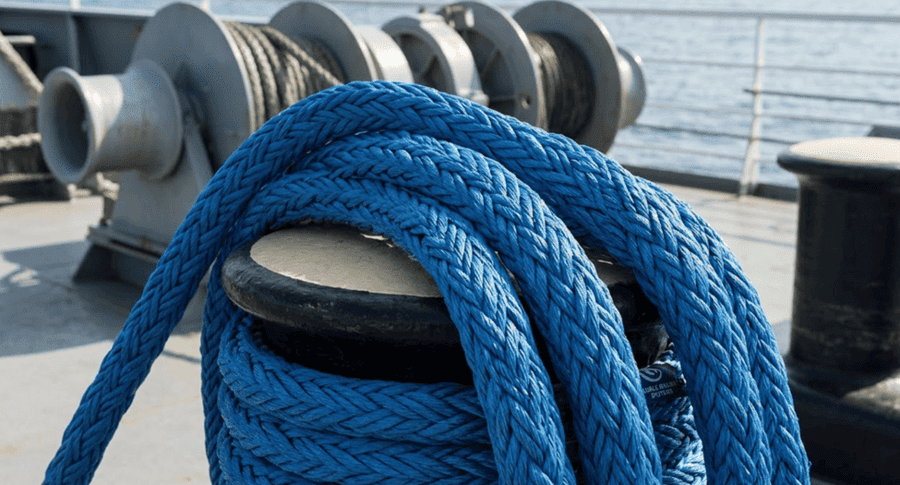
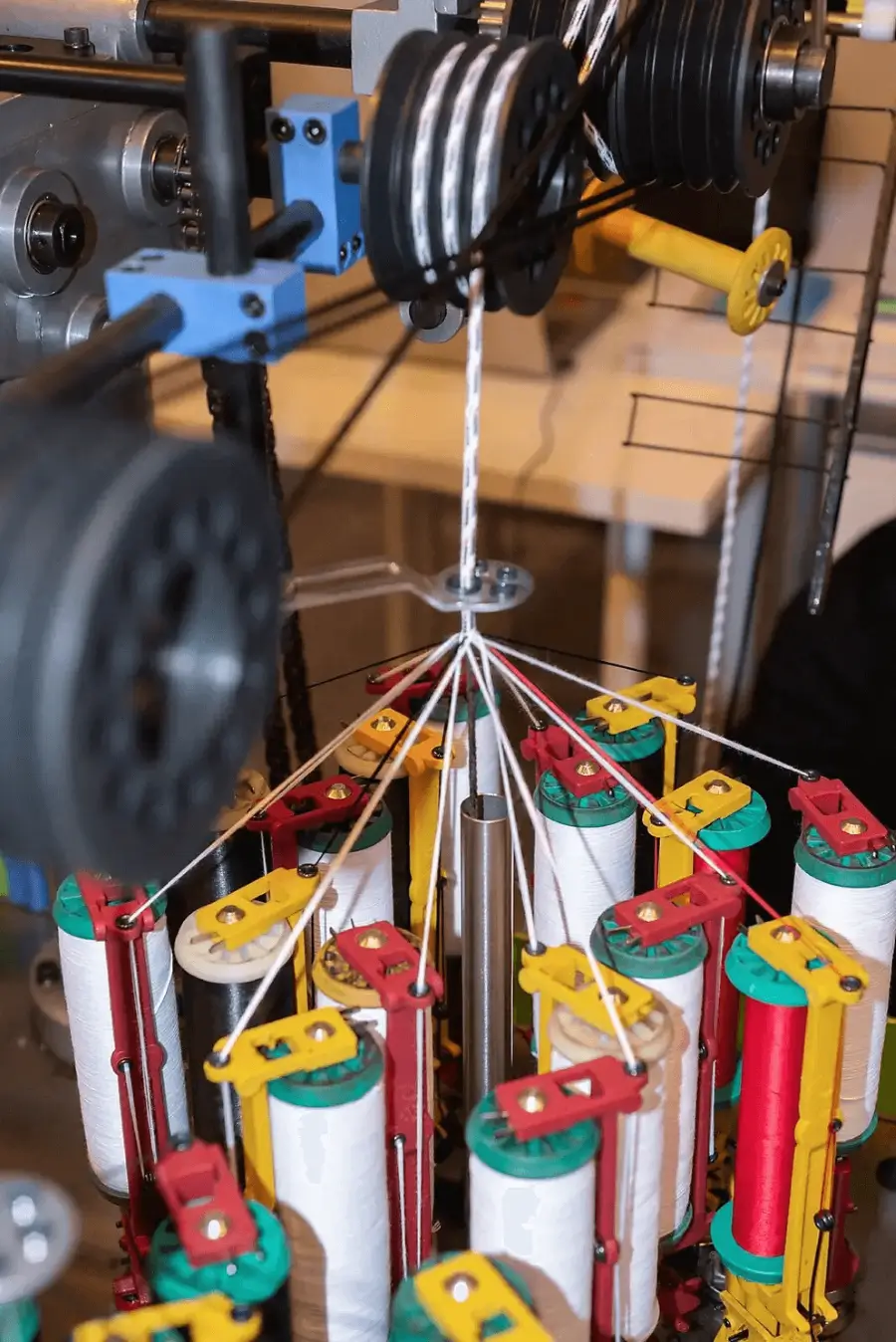
Big industrial looms spin raw synthetic fibers into radically different structural forms. The mooring rope’s physical construction geometry has a direct relationship in how the various types handle on the deck and how they deal with friction.
Double Braided Systems
This is a complex design with an inner load-bearing core fully shielded by a tightly woven outer braided jacket made up of 24 carriers. Engineers can strip out pure strength functions from essential abrasion resistance using this configuration.
- Core Protection: The sacrificial jacket bears 100% of the concrete friction and is a multi-ton tension holder for the protected inner core.
- Handling Feel: Double braids have a perfectly circular cross-section, feel slippery in hand and pass smoothly through contemporary self-tailing winches.
- Splicing Difficulty: Hot Class II double braids require special tubular fids, exacting measurements and a high degree of skill to splice.
8-Strand and 12-Strand Plaited
Plaited ropes are preferred by large commercial ships, because the structural geometry is nearly immune to internal twisting. Under wet conditions, the rugged square profile grips corroded winch drums extraordinarily well.
- Torque Neutral: It hangs limp, straight, undulating under amazing tension without coiling and twists into dangerous hockles or kinks.
- Visual Inspection: It is easy to visually identify if strand pairs are broken or melted during mandatory OCIMF checks.
- High Flexibility: The open, loose weave wraps tightly around small diameter deck bollards without crushing the internal fibers.
| Technical Parameter | Double Braid (24-Carrier) | 8-Strand Plaited | 12-Strand Plaited |
| Load Distribution | 50% Core / 50% Jacket | 100% Shared (4×2) | 100% Shared (6×2) |
| Torque Coefficient | Low (Braided) | Zero (Torque Neutral) | Zero (Torque Neutral) |
| Surface Geometry | Smooth / Circular | Textured / Square | Textured / Hexagonal |
| Bending Ratio | 8:1 (D/d) | 6:1 (D/d) | 5:1 (D/d) |
| Friction Coeff. | 0.12 – 0.15 (Low) | 0.22 – 0.28 (High) | 0.25 – 0.30 (High) |
| OCIMF Inspection | External Jacket Only | Full Strand Access | Full Strand Access |
Comparative Analysis of Mooring Rope Structural Geometries!
The Water Factor: How Wet Conditions Destroy Rope Strength?
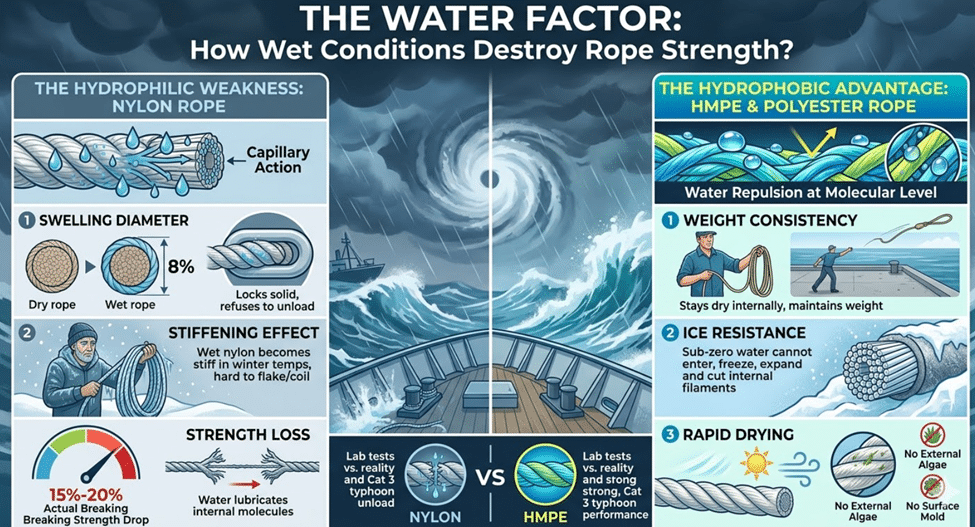
A dry lab tension test says nothing to a cold deckhand in a North Atlantic hurricane. You need to consider exactly how your chosen fibers behave under extended ocean immersion and vigorous capillary action.
The Hydrophilic Weakness
Nylon rope for marine use continuously takes in water molecules into its cellular structure through constant capillary action. This physical fluid swelling alters entirely the internal geometry and friction coefficients of the rope.
- Swelling Diameter: Saturated rope physically reaches 8% thicker, locks solid inside marine fairleads refusing to unload.
- Stiffening Effect: Wet nylon becomes stiff under winter temps and mercilessly resists the weary deckies attempting to flake or coil it.
- Strength Loss: Water actively lubricates the internal molecules in your rope, translating to a remarkable 15%-20% drop in actual breaking strength.
The Hydrophobic Advantage
HMPE and the high-grade polyester actually repel water completely at a microscopic molecular level. These high technology fibers perform the same in a Category 3 typhoon as when lying on a dry, sunny deck.
- Weight Consistency: The line internally stays dry, maintaining weight consistency so a heavy heaving line can still be thrown across the concrete pier.
- Ice Resistance: The core is so tight, the sub-zero water cannot enter to freeze, expand and cut up internal filaments during Arctic operations.
- Rapid Drying: Moisture on the jacket surface dries out fast and doesn’t grow external algae or temporary surface mold.
Fighting Wear and Tear: Heat, Friction, and Fatigue!
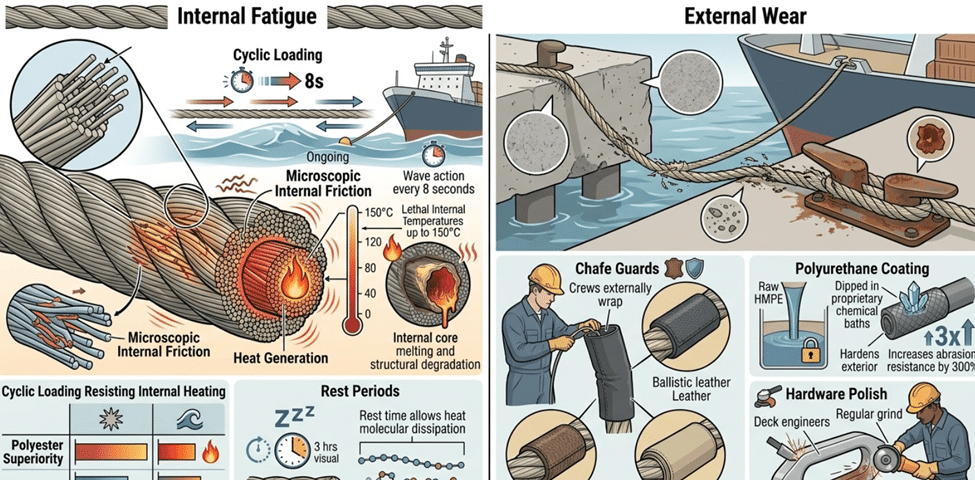
Heavy ropes kill themselves from within with ongoing microscopic friction between strands. You have to understand how you can have these cyclic loadings that can create lethal internal temperatures up to 150°C in the center.
Cyclic Tension Fatigue (TCLL)
A ship moored in such waves, experiences stretching followed by relaxation of the ropes every 8 seconds. This tireless cycling partners with extreme internal friction between the thousands of single polymer filaments.
- Heat Generation: The core of thick ropes melts away in seconds and degrades under your fingers, destroying the rope without leaving a mark on the outside.
- Polyester Superiority: Polyester outperforms standard nylon in resisting this internal heating circuit substantially during the Thousand Cycle Load Level (TCLL) tests.
- Rest Periods: Heavy synthetic lines do physically require hours of “rest” time to retain their original molecular length and expel trapped heat.
External Chafe Management
Rough concrete piers and deeply rusted steel deck cleats shred expensive synthetic jackets in hours. To safeguard your capital line investments, you will have to employ tangible mechanical barriers. Have you ever wondered if a simple mooring pendant could save your primary lines from this destruction?
- Chafe Guards: Crews externally wrap all contact points on critical hardware with 5mm thick ballistic leather or heavy high-denier canvas.
- Polyurethane Coating: Raw HMPE lines are dipped in proprietary chemical baths by manufacturers to harden the exterior, enhancing abrasion resistance by 300%.
- Hardware Polish: The deck engineers must ensure to regularly grind down every sharp metal burr and rust scale on fairleads.
Thinking Like an Owner: Real Five-Year Replacement Costs for Gear!
Fleet procurement officers destroy maintenance budgets when they only consider the nominal raw purchase price per meter. You need to consider the overall five-year total cost of ownership (TCO), including labor, downtime and replacement cycles.
Initial Expenditure vs. Lifespan Amortization
HMPE costs way more per meter up front than basic polyamide nylon, much less budget polypropylene. Yet the longer replacement cycle is what truly determines the profitability of running the fleet.
- Nylon Replacement: Nylon rope absorbs moisture and is constantly compressed and stretched; this damages the internal ropes for approximately 18 months.
- HMPE Longevity: An HMPE line that is properly stored, maintained, and rotated lasts 60 to 84 months with ease, fully offsetting the original CAPEX.
- Labor Costs: Replacement of heavy steel wire necessitates hiring expensive dock-side cranes; replacement of lightweight HMPE requires precisely two deckhands.
Operational Efficiency Gains
Lightweight synthetic lines significantly accelerate docking operations and minimize costly hourly harbor tug standby charges. Quick turnarounds create massive direct revenue for tight-margin commercial shipping companies.
- Speed Of Handling: Personnel deploy lightweight HMPE 40% faster than traditional grease-covered 6×36 steel wire ropes.
- Injury Reduction: Lighter ropes take the injury risk out of use completely so there are no expensive medical insurance claims for back injuries.
- Fuel Savings: Reducing heavy steel deck weight by 8 tons increases general fishing fuel efficiency for a 300-day sailing year by about 1%.
Critical Maintenance: Stopping Rope Failure Before It Starts!
Failing to maintain the deck hardware from day one brings with it a certain, and likely deadly at worst, line failure. To safeguard your crew and multi-million-dollar vessel, you need to enforce stringent Condition Indicator (CI) inspection protocols.
Visual Inspection Protocols
Deckhands have to walk the full length of the lines every day and inspect for highly specific signs of terminal damage. Synthetic ropes cannot be used again if there is suspected core structural damage; they need to go straight into retirement.
- Glazing: Glossy, hardened melted areas mean that friction heat above 150°C has occurred and the internal fibers are irretrievably damaged.
- Pulled Strands: Tangled and slack loops completely destroy the equal mathematical distribution of fair loads that weigh tons.
- Powdering: Very thin white powder pouring out of the core indicates heavy internal filament wear and fulfilling structural collapse.
Washing And Storage Engineering
The tiny salt crystals cut through the woven rope like thousands of little razors. To maintain the molecular structural integrity of your polymers, you clean your lines religiously. Marlow Ropes notes, rinsing reduces salt and dirt that affect rope life.
- Freshwater Rinse: Flush deck lines with volume low pressure fresh water once per month to dissolve and rinse embedded salt crystals.
- Air Drying: Leave the lines flaked out loosely on dry wooden pallets on deck so they can completely evaporate before stowing below.
- Dark Storage: All synthetic fibers are stored deep below deck in dedicated lockers far from harmful ultraviolet radiation.
Vessel Matchup: Pairing the Right Rope to Your Boat!
Different rope elasticity distributions are needed for basic survival in different maritime sectors. You can’t safely use a stretchy cruise ship line on an enormous offshore drilling rig.
Heavy Cargo And VLCC Tankers
Things like giant steel ships gain amazing unmatchable momentum in the four knot tidal races. They demand high-end, 2,000+ kN breaking strength with tightly controlled, low-elongation characteristics.
- Primary Lines: Super-tankers use 44mm thick HMPE ropes for stiff, high-strength station keeping against huge wind loads.
- Mooring Tails: Mooring tails knot to the HMPE soft eye 11 to 22 meters of nylon tails that absorb the instantaneous, powerful shocks from wave strikes.
- Winch Capacity: The yard deck machinery demands nothing less than the smaller spooling diameters that modern HMPE has over even traditional wire.
Recreational And Superyachts
Billion-dollar yacht captains care about keeping the decks pristine, running as quiet as possible and being gentle in the hands of equipment. They adamantly refuse to employ scratchy lines that squeak under tension or scuff custom gel coat finishes.
- Polyester Preference: The smooth, soft PET jacket glides silently through polished stainless steel deck chocks without squealing.
- Mooring Compensators: Boatyachts can attach heavy rubber snubbers directly onto their mooring ropes for boats to cushion boats noisily jerking against the marina.
- Color Matching: Owners can custom-order dyed lines that match the specific hull paint color codes precisely.
Next-Gen Rigging: Sensors and Eco-Friendly Fibers!
State-of-the-art digital technology for the heavy rigging industry to prevent deadly, rapid velocity snap-back accidents. To combat future long-term strict port compliance, you should stay ahead of these engineering trends.
Internal Load Sensors (FBG Technology)
Now, progressive manufacturers actually weave microscopic Fiber Bragg Grating (FBG) fiber-optic cables into the load-bearing core of the rope itself. These optical sensors directly relay real-time megapascal tension data to the captain’s bridge display.
- Overload Alarms: When tension is above 80% of the safe working line, it automatically triggers loud sirens on the digital system.
- Fatigue Tracking: In-house software tracks the precise number of stretch cycles in order to forecast failure well ahead of when it happens.
- Maintenance Logs: Encrypted digital records show ironclad compliance to the very strict slate of port authority inspectors.
Sustainable Bio-Polymer Alternatives
International laws mandate environmental conservation leading to synthesis of eco-friendly polymers by chemical industries. The maritime industry aims to abolish thousands of tons of microplastic pollution leaching off annually in ports worldwide.
- Recycled PET: Next-gen factories spin superstrong polyester jackets from recycled ocean plastic bottles with no loss of strength.
- Bio-Based HMPE: High-modulus structural fibers are now derived from bio-based, non-petroleum agricultural waste products.
- End of Life: Responsible companies are buying back old, retired lines so they can be melted down and recycled into a closed loop.
Bonus – FAQs!
What Makes HMPE Stronger Than Steel?
Manufacturers align those ultra-high molecular weight polymer chains in a single linear direction. It generates fantastical 35 g/d tensile strength yet is 700% lighter than steel wire.
Why Do Nylon Ropes Stretch So Much?
Polyamide molecules behave just like coiled springs at the microscopic level. Expanded in extreme mega-ton loadings, they extend toward 40% and absorb massive kinetic energy safely.
Does Water Ruin Polyester Mooring Ropes?
Incorrect. Polyester has a 0.4% moisture regain and is completely hydrophobic. It absorbs almost no water, retains full breaking strength wet, and resists hazardous internal freeze.
How Often Should I Replace My Deck Lines?
Replace commercial nylon lines that have seen heavy use every 18 to 24 months. Check daily for bad glazing, slipped fiber, and powdering of core areas.
Can I Mix HMPE And Nylon On The Same Cleat?
Never. The stiff HMPE will absorb all of the dynamic load and will break instantaneously. Lines on the same tension axis must have identical physical elasticity.
What Causes Synthetic Ropes To Melt Internally?
Internal friction between filaments is significant as a result of cyclic stretching. This 8-second fast tension cycle generates temperatures up to 150°C.
Why Do Ports Require Nylon Mooring Tails?
Sudden surges from wave action often lead to HMPE deck lines snapping steel hardware. Spliced 11-meter nylon tails serve as a vital mechanical shock absorber.
How Do I Protect Ropes From Rough Concrete?
Put on thick 5mm heavy duty polyurethane chafe guards. Use these protective hardened sleeves to cover the rope where it rubs against abrasive surfaces.
Does UV Light Destroy All Synthetic Ropes?
Ultraviolet radiation degrades polypropylene in months, ruining its strength. Polyester resists UV incredibly well, while HMPE needs a protective coating.
Why Choose Duracordix For Custom Rigging?
Duracordix engineers specific load ratios and is certified OCIMF MEG4 compliant. Their safety design provides 80% lower recoil and accurate bulk pricing for fleets.
Conclusion
There is zero engineering error margin tolerated in maritime operations. Achieving the best possible port safety and ultimate compliance through analyzing accurate dynamic stress load charts HMPE vs Nylon mooring rope power the true long-term operational efficiency and CAPEX reality of modern fleets.
Quit guessing on how much line tension the vague numbers can take. Enable real, data-driven engineered reliability on your heavy ships. Contact DURACORDIX today to design custom ISO-certified rigging assemblies or get precise volume pricing on bulk orders instantly.
About The Author

Moses Xu
Hi, I’m Moses Xu, VP and Marketing Director at Duracordix. With 10+ years in high-performance synthetic ropes and netting, I specialize in export trade and marketing. Whether it’s HMPE, Kevlar, or nylon ropes, I’m happy to share insights and connect!
 English
  Español
  Deutsch
  Français
  العربية
  한국어
한국어  Русский
  Ελληνικά
  Italiano
  Português
  日本語
日本語  Türkçe
  Tiếng Việt
  简体中文
简体中文  Suomi
Suomi  Svenska