Introduction
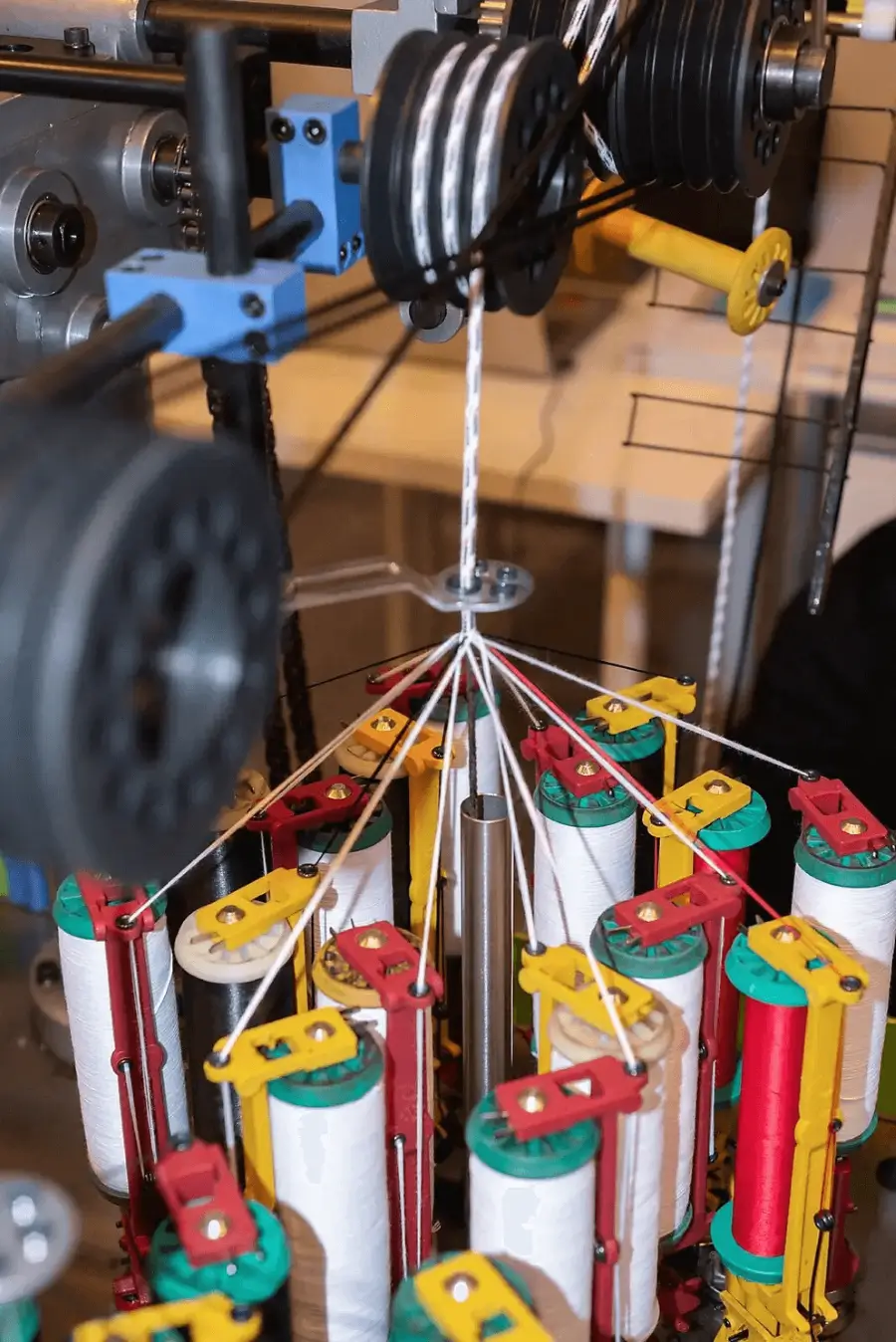
Do you have heavy lifting to do? Then you certainly need to buy a synthetic sling, and this guide assists you. We cover the key types of synthetic slings, including web slings, round slings, and rope slings. Furthermore, we explain the numerous materials, crucial synthetic sling inspection requirements, and safe usage.
What Defines The Right Synthetic Sling?

Ultimately, the right synthetic sling must be the one certified to lift the entire weight, which is why it is critically important to know the precise weight of the load before you rig it. In my own experience on large-scale sites, I’ve seen lifts approaching 3000 tons, so this step is non-negotiable.
There is also the environment to consider; for instance, are there any chemicals present, or will there be prolonged UV radiation? A functional sling also falls under the category of light slings; for your information, it may be a complete 1/8 of a steel weight, which dramatically reduces handler fatigue.
Flexibility is another major factor, as this ensures that your load is not damaged. “A proper synthetic sling should be conforming to the ASME B30.9 rules,” which is a crucial safety regulation that, when followed, ensures accidents are averted.
Understanding The Core Synthetic Sling Types!
Now we are going to analyze the core types of synthetic slings, because there is much more to these tools and their features than meets the eye.
A. Synthetic Web Slings
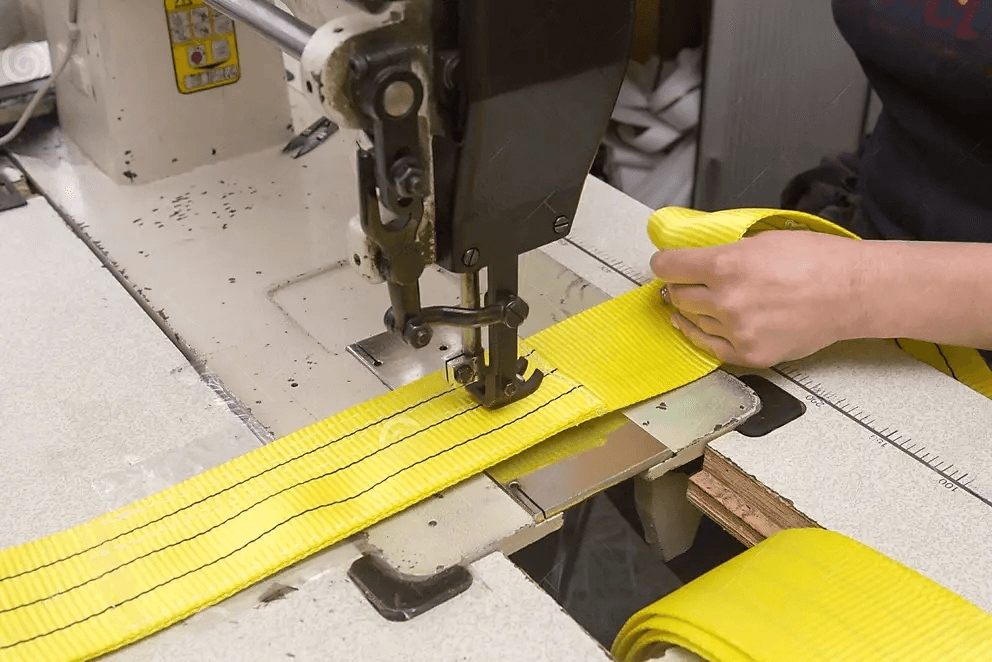
Synthetic web slings are extremely common, as these synthetic slings are made from flat woven synthetic fabrics, such as polyester and nylon. Their inherent strength, flexibility, and general-purpose lifting capabilities enable them to protect delicate surfaces effectively. A key feature is that these slings have a 5:1 design factor.
1. What Are Its Key Features?
Flat Woven
Radially, the flat webbing sling grips and supports loads effectively. Additionally, this synthetic webbing design armors and protects the surfaces being lifted.
Polyester/Nylon
Polyester is resistant to acidic conditions while nylon slings are resistant to alkaline conditions, although both materials certainly have their limitations.
5:1 Factor
These soft sling options have a 5:1 safety factor design, which is exceptionally strong.
2. What Are The Top Applications?
- Protecting delicate or fragile loads
- Commonly used on construction sites
- General lifting webbing systems
3. What Is The Material Composition?
1-Ply / 4-Ply
1-Ply and 4-Ply variants are available; essentially, more plies equal more strength.
Woven Fabric
The design offers strong synthetic webbing with ample support due to the woven fabric construction.
Stitched Layers
Stitched layers satisfy the webbing sling specification due to the webbing’s robust construction. Have you ever checked the ply stitching on your own slings? It’s the first place I look for wear.
B. Synthetic Round Slings

Synthetic round slings are composed of round slings with endless fibers, which are subsequently covered by a protective jacket for core yarn protection. Even though they possess only a 3% stretch, their fabric is extremely flexible and can conform to almost any load shape. For specific capacities, you should always refer to the round sling load chart.
1. What Is The Core Technology?
Endless Fibers
The endless core yarns bear the load, allowing this fibre sling to possess remarkable strength.
Protective jacket
The protective jacket shields the core, helps withstand cuts, and prevents UV exposure.
3% Stretch
The polyester slings’ 3% stretch is highly beneficial for precise load control. According to the Occupational Safety and Health Administration (OSHA), maintaining load control is paramount, and this low-stretch characteristic is a key reason why “polyester slings are renowned for their low stretch and excellent resistance”.
2. What Are The Core Dimensions?
Color Coding
Colors indicate the sling capacity; always check the lifting slings colour chart.
WLL Tag
The WLL tag is critically important because it illustrates the synthetic sling capacity chart.
5T/10T
While common slings are rated 5T or 10T (like a 3 tonne lifting slings option), it is always important to check the specific tag.
3. What Makes The Design Unique?
- It has a unique seamless loop.
- It allows the user to rotate wear points.
- It fits well into irregular shapes.
C. Synthetic Rope Slings

Synthetic rope slings are extremely strong and lightweight, often containing UHMWPE fibers which are 8 times stronger than steel. These remarkable synthetic fiber slings have a very low stretch of less than 1%, which is incredibly beneficial for heavy lifting. This performance is why they are often used for massive 3000T lifts. I’ve personally seen synthetic rope used in vehicle recovery, and the difference in safety and ease of use compared to old steel cables is night and day.
1. Key Innovations
UHMWPE
UHMWPE fiber is extremely lightweight while simultaneously being stronger than steel.
Kevlar
Kevlar, which is an Aramid, offers significant heat resistance while maintaining low stretch.
12-Strand
A 12-strand braid is common, making this synthetic rope sling more flexible.
2. What Are The Performance Metrics?
8x Steel
UHMWPE offers 8x steel strength, making it a prime heavy duty synthetic slings choice.
<1% Stretch
These slings have <1% stretch, which consequently provides precise load control.
Lightweight
Synthetic lifting slings are exceptionally light, which significantly reduces worker fatigue.
3. What Are The Primary Use Cases?
- Heavy lift synthetic slings
- Offshore rigging
- Vehicle recovery
- Mining
D. Endless (Infinite Loop) Slings

An endless synthetic sling is incredibly useful. Because it is a closed circle with no joints, this design inherently eliminates weak points. This allows you to rotate wear points, which dramatically prolongs the lifting sling lifespan. This versatile sling can be used in all hitches; for example, you may employ it in choker, basket, or vertical lifts. However, as Mazzella Companies notes, “The sling can be rotated throughout its service life to minimize wear”, but you must always perform a thorough endless sling inspection prior to use.
1. How Is It Designed?
Continuous Loop
This sling is one continuous loop, and this design is incredibly strong.
No Seams
Having no seams means there are no concentrated points of failure, which greatly increases the durability of the sling.
Web/Round
This endless design applies to both web slings and synthetic round slings for sale.
2. What Are The Primary Benefits?
- It rotates wear points
- Its service life is prolonged
- Its hitches are versatile
3. What Are The Top Applications?
All Hitches
This sling works with all three hitch types, making it highly versatile.
Repetitive Lifts
This sling is ideal for repetitive lifts because its life can be prolonged by rotating it.
Choker/Basket
It is particularly effective in choker hitches and works very well in basket hitches too.
E. Eye And Eye (EE) Slings

Eye and Eye (EE) slings are quite popular and simple to use. These slings are defined by the presence of sewn loops (closed eyes) at both ends. You can use synthetic slings with hooks or shackle the eyes, which come in flat or twisted eye configurations. Twisted eyes (Type 4) are especially well suited for choker hitches. Eye slings with flat or twisted eyes are common polyester synthetic sling types.
Furthermore, reinforced eyes offer the wear pads for synthetic slings needed for high-use applications. Dimensions are measured by tip-to-tip length, with widths typically from 1 inch to 12 inches.
Always check the synthetic sling chart and, most importantly, the WLL tag. Mazzella reminds us that “An eye and eye sling length is measured from tip to tip of the eyes”, so there should be no confusion.
1. What Is The Material Composition?
Sewn Eyes
These are closed, sewn eyes that offer the connection points needed for the high strength and rigidity the sling system will experience.
Polyester Sheath
A polyester sheath protects the core and provides great abrasion resistance. Have you ever compared a sheathed sling to an unsheathed one after a tough job? The difference in wear is astounding.
UHMWPE Core
Some EE slings offer immense strength due to the use of a UHMWPE core.
2. What Are The Available Models?
Flat Eye
Type 3 flat eyes are versatile and well-suited for both vertical and basket hitches.
Twisted Eye
Twisted Type 4 eyes are well suited for choker hitches due to their 90° twist.
Reinforced Eyes
Reinforced eyes offer slings with high use the wear resistance needed to prove longevity.
F. Specialized Sling Configurations

Sometimes, you may require special synthetic rigging slings. This type of adjustable lifting slings may have additional wear pads. LT (Wide Lift) slings help distribute weight more evenly to avoid damaging delicate items. Multi-leg slings use 2, 3, or 4 legs, which helps balance large loads. These lifting slings are often fully adjustable, and thus can be made to fit the purpose, as we can alter them to suit your needs.
1. What Are The Available Models?
Reversed Eye
Reversed eye slings tend to be highly durable and reliable, as they often come with wear pads on both sides.
Wide Lift (LT)
Wide lift (LT) slings are designed to support more bulky loads and are still able to protect thin, fragile surfaces.
Multi-leg
Multi-leg bridles (bridle assemblies) help distribute and balance loads.
2. What Are The Connectivity Features?
Triangle (TT)
Triangle fittings (TT) serve as hardware for basket hitches, utilizing triangular metal ends.
Choker (TC)
Choker fittings (TC) are metallic components that work specifically for choker hitches.
Master Link
Multi-leg slings can be connected with a master link; you can see these in guides under rigging hardware names.
Choosing Your Synthetic Sling Material!
To truly understand your options, material selection plays an important role, as it directly affects the strength, stretch, and chemical resistance of the line.
Nylon (8-10% Stretch)
Nylon rope slings can stretch 8-10% at WLL. This stretch capacity aids in absorbing shock loads, making it ideal for dynamic lifts. However, acid is not one of nylon’s best friends. It still has its applications in the construction field. Mazzella confirms this, stating, “The stretch of a nylon sling at capacity is approximately 8-10%”. You must always refer to your Nylon sling capacity chart for confirmation. It is, indeed, one of the most durable materials for slings.
Polyester (3% Stretch)
Polyester, on the other hand, is more rigid, only stretching 3% at WLL. It therefore provides more control, which is ideal for low-headroom lifts. It is important to note that polyester is resistant to acids. You can verify this in the polyester webbing sling specification. Among the various materials for slings, this is the most common. Under no circumstances, however, should it be used with strong alkalis.
Alkali Environments
For alkali environments, you must use synthetic fiber slings made of nylon. Nylon is the strongest of these fibers for strong alkali resistance, while polyester stands no chance in alkaline solutions at elevated temperatures. Always refer to your chemical chart for confirmation, as this helps eliminate the risk of a sling failing and hurting someone. Our professional advice will be beneficial in this case.
Acid Environments
You must use polyester slings in acid environments. Most polyesters are resistant to acids and also resist bleaches. However, nylon will be disintegrated by acid, making this choice vital for safety. The synthetic sling color chart should be adhered to, so always refer to the synthetic sling tag.
UHMWPE (10:1 Strength)
UHMWPE is very light but has an incredibly high 10:1 strength-to-weight ratio; its strength is significantly higher than steel. It also has good abrasion and chemical resistance. This material is incorporated in synthetic fiber rope slings and is ideal for heavy lifts because it offers high performance while being very light.
| Material | Stretch @ WLL | Acid Resistance | Alkali Resistance | UV Resistance | Temp Limit (F) | Abrasion Resistance |
| Nylon (PA) | 8-10% (High) | Poor (Avoid) | Excellent | Good (Degrades) | ~194°F | Excellent |
| Polyester (PET) | ~3% (Low) | Excellent | Poor (Degrades) | Excellent | ~194°F | Good |
| Polypropylene | 10-15% (High) | Excellent | Excellent | Poor (Fast fade) | ~180°F | Fair |
| UHMWPE (HMPE) | <1% (Very Low) | Excellent | Excellent | Excellent | ~150°F | Excellent |
| Aramid (Kevlar) | <1% (Very Low) | Fair | Fair | Poor (Jacket req) | >300°F (High) | Fair (Internal) |
Technical Comparison of Synthetic Sling Materials!
Factors For Synthetic Sling Selection!
Each lift has a set of key factors that must be adhered to, and following them will ensure the correct sling is chosen.
Load Weight
First, you must identify the load weight. The WLL of the sling must exceed it, and the WLL can always be found on the tag. Exceeding the rated capacity is an extremely dangerous practice. While it is standard to have options like a 3 tonne lifting slings available, you must ensure you check the capability of the specific synthetic slings capacity you are using. This is the most vital step for safety, and the charts we provide are straightforward.
Basket Hitch
A basket hitch can increase productivity, as it can double the device’s capacity by employing two legs. This hitch greatly helps in supporting the device and the attached load. However, the angle matters significantly; a 90-degree angle is best, while a 30-degree angle is lower and will reduce the capacity. This setup is great for heavy duty synthetic slings and balanced loads.
Choker Hitch
A choker hitch forms a tight choke on the load. It also reduces the WLL of the sling, often to 80% or lower, because of the sharp bend. Do not apply choke angles lower than 120 degrees. This hitch is best for bundles, and synthetic sling fittings are ideal for use with this hitch.
UV Degradation
Synthetic flat slings are very susceptible to UV degradation, as the sun will break down the fibers. When inspecting slings, look for faded or sun-bleached areas. Slings should always be stored in a dark and dry place. This damage is a significant factor that warrants the retirement of the sling.
Chemical Exposure
Slings can also be damaged by chemical exposure. Acids will destroy nylon fabric, while alkalis will soften polyester. Heat and chemicals used on slings will greatly affect them. The imprints or burns are often readily visible.
Edge Protection
Always use edge protection on your slings. These pads, also known as wear pads for synthetic slings or sling corner protectors, protect the synthetic sling from cuts. This protection is required by OSHA and is essential for safe lifting.
How To Inspect Your Synthetic Sling?

Synthetic slings must be inspected by competent individuals. OSHA 1910.184 clearly states that “a qualified person is needed to inspect slings each day before use for damage or defects”. You must inspect slings every day before they are used and actively seek out any possible damage. Here’s a short video for you!
Missing Tag
The absence of a tag, or a tag that cannot be read, is of severe consequence, and the sling must be taken out of service. The tag demonstrates the WLL and the material type, which is an OSHA regulation. You cannot use a sling without a WLL tag, and this applies to Olympic synthetic slings as well.
Broken Stitching
You must examine the perimeter of all load-bearing stitching and look for worn or broken threads. This damage is most common in the eyes. Broken stitching may be an indication of overload, representing significant synthetic web sling damage. The sling must be retired. A synthetic sling inspection form should be used to document this.
Cuts (Red Yarn)
Examine the sling for any cuts and tears. A great number of slings have a red warning yarn. If you see that red yarn, you must stop immediately, as the core is compromised. “If red safety yarns are exposed, retire the sling immediately”, states Connect-KNKT. When inspecting synthetic slings, look for this red thread. The sling must be retired. This is a common failure point found during synthetic web sling inspection.
Heat (Melting)
Check for any destruction due to heat, which includes melting or charring. You may note stiffness or glossiness on the slings. Synthetic web slings should not be exposed to temperatures above 194°F (90°C). This damage is beyond repair, and the sling must be retired immediately, as this is an important safety concern.
Chemical Burns
Check for chemical burns or damage. Discoloration is prevalent, and the fibers may also become brittle. Burns can be formed by both acids and alkalis. Always check the material type and retire the sling if it is burnt.
Knots (Immediate Discard)
Knots in a sling must be avoided and result in immediate discard. Knots will reduce the WLL of a sling by 50% or more, and the fibers will sustain permanent damage. This is a very unsafe practice, which is why slings must be examined for them.
Synthetic vs. Wire Rope Slings! What To Choose?
Let us take a comparative look at synthetic slings and steel slings, noting the important differences.
Weight (1/8th Steel)
Synthetic rigging slings are extremely light, weighing approximately 1/8th that of steel. This lightweight design ensures less worker fatigue and fewer hand injuries, which is a great advantage.
Load Protection
Natural and synthetic fiber rope slings protect the load. Their soft surface does not scratch or damage finished or delicate surfaces, which is good for fabrication. Wire rope, on the other hand, often scratches loads, making synthetic slings a financial advantage.
Crushing (No)
Synthetic slings do not crush; they conform to the shape of the load. Wire rope, however, is susceptible to crushing and kinking, which damages it. This makes synthetic fiber slings more durable in some aspects, as their high pliability is a distinct advantage.
Flexibility (High)
Adjustable models of slings are highly flexible and can be rigged quickly. They can be utilized in confined spaces, unlike rigid wire rope which is difficult to maneuver around complex shapes. This flexibility enhances productivity.
Heat (400°F Wire)
Wire slings can be used up to 400°F, while synthetics, on the other hand, have a very low limit of 194°F. This is a key difference.
Cost (Lower)
Synthetic slings are inexpensive and have a very low price per use. If one is damaged, it is cheap to replace, whereas wire rope slings tend to be more expensive. This is one of the many reasons to prefer synthetics.
| Characteristic | Synthetic Sling (Fiber) | Wire Rope Sling (Steel) |
| Weight (vs Steel) | 1/8th (12.5%) | 1 (100%) |
| Load Protection | Excellent (Non-Marring) | Poor (Scratches) |
| Crush/Kink Risk | Resistant (Conforms) | Susceptible (Kinking) |
| Flexibility | High (Pliable) | Low (Rigid) |
| Max Temp Limit | ~194°F (90°C) | ~400°F (204°C) |
| Elongation (Stretch) | 3-10% (Varies) | ~3-5% (IWRC) |
| Initial Cost | Low (Inexpensive) | High (Expensive) |
Synthetic vs. Steel Wire Rope Sling Comparison!
7 Tips For Proper Synthetic Sling Usage!
The more properly a sling is used, the longer its service life will be, and the more protection it will offer the user. Bishop Lifting agrees, stating “understanding the advantages of synthetic slings can help you work more efficiently and safely”. There are numerous tips for best practices for synthetic sling use.
Avoid Shock
Never shock load a sling. Do not rush, as this only leads to broken slings and injuries. Shock loading is very dangerous; therefore, you must always apply force gradually. This is a top synthetic slings safety rule and is essential for synthetic sling certification.
Protect Edges
Always protect slings from sharp edges. This is the biggest reason for sling failure and a simple reason why OSHA B30.9 mandates it.
Angle (30° Min)
Slings should not be used at low angles. Do not drop below a 30-degree angle, as a 30-degree angle effectively doubles the stress on your sling. Always look to your synthetic web sling capacity chart.
Store Dry
Store slings in a cool, dark, and dry place. They should not be stored in direct sunlight. It is important to prevent storage in any way that allows moisture, as dampness can cause mildew. Proper storage conditions will extend the lifting sling lifespan and is smart synthetic sling safety.
No Knots
Slings should never be used with knots. Knots reduce the strength of any sling by 50% or more and damage the fibers. If a sling has a knot, discard it. Proper synthetic sling shackles should be used to shorten slings instead. Using knots is a deadly mistake.
Center Load
It is important to make sure the load is properly centered in the sling, as this allows the load to be balanced. An unbalanced load can slip or tilt, which is very dangerous. Do you always check the center of gravity? This is critical, especially when using a lifting rope with hook.
How Did Duracordix Synthetic Slings Help Clients? Real Feedback!

Marine Operations
Our marine clients rely on Duracordix. They updated to our UHMWPE slings for offshore lifts, mainly due to their 8x strength-to-weight ratio compared to steel. These synthetic slings are not damaged by saltwater or UV rays. This feature is vital for brutal marine environments.
As the Offshore Technology Conference notes, “Material integrity in saline environments is key.” This upgrade enhanced the client’s safety record. It also resulted in less tedious work and boosted overall productivity. Every synthetic sling WLL is certified.
Rugged Terrains & Mining
Managers like Dimitri Ivanov work in rugged terrains or mining. They have a much higher demand for a durable synthetic sling. We supplied a solution: custom-designed, multi-legged bridle assemblies. These synthetic rigging slings are made from Kevlar and UHMWPE. The slings kept a low stretch of under 1%.
ASME B30.9 states, “slings in severe environments require specialized materials and rigorous inspection.” These safe, lightweight synthetic rope slings (a SPAR Award winner) use an extreme abrasion-resistant construction. This reduces failures, lowers operator fatigue, and causes no load-crushing damage.
Wholesale Logistics
Wholesalers like Claire Dawson Rosa need reliability for repetitive lifts. We provided polyester web slings with a 5:1 safety factor. Claire noted these synthetic web slings prevent load rub damage. Their 3% low stretch is perfect for low-headroom warehouse conditions. Warehouse Safety Guidelines emphasize “load control in low-headroom environments.” Our clients rotate their synthetic round slings. This is a key part of endless sling inspection. Doing so extended the service life and lowered annual costs.
Auto Recovery
Shock loading is the main concern in auto recovery. We supplied our 8-10% high-stretch nylon slings for this purpose. These slings absorb the dynamic forces that happen during difficult extractions. This prevents major failure. The Towing & Recovery Association (TRAA) warns, “using low-stretch materials for dynamic recovery is a primary cause of failure.” Our customers report safer and faster recovery operations. These synthetic rope slings are light, easy to handle, and do not kink.
FAQs!
Below are some of the most frequently asked questions. Slings are used more safely when these answers are known.
What Is The 5:1 Safety Factor?
The synthetic sling safety factor is 5:1. This translates to the sling’s breaking strength being 5 times its Working Load Limit (WLL). This is an ASME B30.9 standard. While it provides a buffer, it absolutely does not mean you can overload the sling.
Inspect Slings Before Each Use?
Yes. OSHA states that synthetic slings must be inspected before each shift by a competent person. Cuts, burns, or knots should be noted. A daily inspection must be done. This is an important safety step, and you should use a synthetic sling inspection checklist.
When To Retire A Synthetic Sling?
A sling should be retired right away if it is damaged. This includes missing tags, cuts, burns, knots, or broken stitching. U.S. Cargo Control emphasizes that “If you notice any visible damage… you should remove the sling from use”. The statement that synthetic fiber slings may be used for hoisting personnel baskets is false; damaged slings should never be used, as this is completely unacceptable.
Polyester Slings Resist Acids?
Yes, polyester has a fair resistance to many acids and also does well against bleaches. However, acid destroys nylon fabric. This is counter-balanced by nylon’s resistance to alkalis, which polyester does not have. Always double-check your chemical composites, as this marks a key difference in the types of synthetic slings. We have a chart for that.
What Is The 194°F Heat Limit?
Synthetic slings are weak in high heat. The limit is 194°F (90°C). Higher heat will melt the fibers, rendering the sling useless. Do not use them when welding. For high-heat applications, you must use heavy duty wire rope slings. This is a hard rule.
Conclusion
You now understand the different types of synthetic slings and materials like nylon and polyester. You are familiar with key selection factors, inspection, and safe use. Using the proper synthetic sling protects your load and ensures efficiency. For professional assistance, visit Duracordix for exceptional lifting solutions.
About The Author

Moses Xu
VP & Technical Marketing Director
With over 10 years of hands-on experience in high-performance synthetic fiber technology, I help global clients—from professional racing teams to maritime engineering companies—To create unique and special fiber solutions by using high performance UHMWPE, Kevlar, and Nylon fiber etc. Let’s help you for the next project and solve all your pain points togeth
 English
  Español
  Deutsch
  Français
  한국어
한국어  Русский
  Português
  Suomi
Suomi