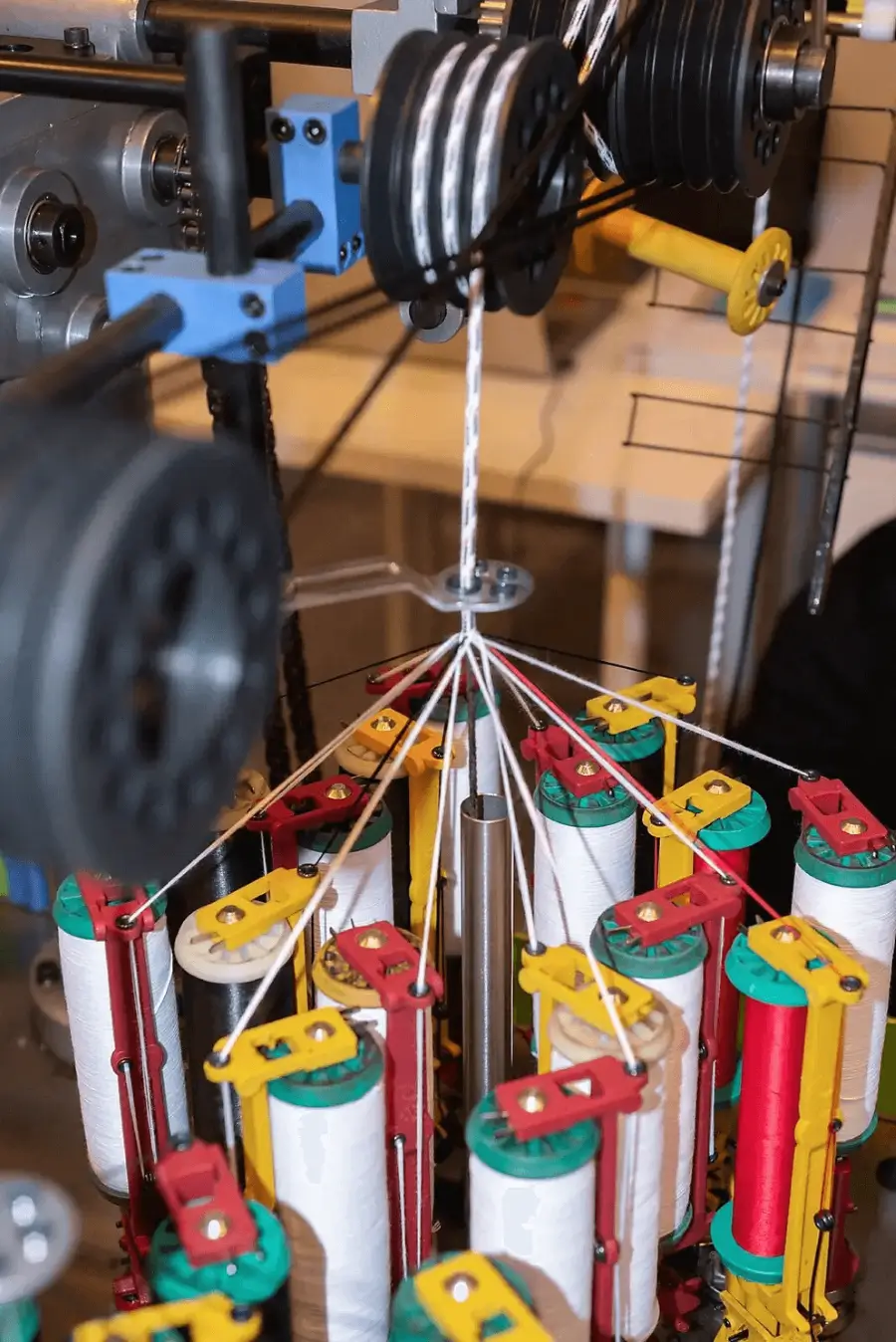
Choosing proper rope diameter and length guarantees safe work environments. Thinner ropes (12mm – 16mm) reduce weight, but require appropriately sized sheaves and capstans. Thicker heavy-lift ropes (24mm – 36mm) resist abuse. The minimum distance requirement for standard offshore deck-to-vessel lifts is now 50 m. Insulate yourself by measuring your typical lift plans and purchasing enough rope to accommodate at least 10-15% additional safety margin over the published block-to-load distance.
Here We Go..
Have you ever pondered heavy maritime rigging slings in endless color-coded weight capacities? Wonder no more. Before purchasing gear, evaluating the exact rope diameter and length prevents dangerous crag situations. We help marine riggers make confident decisions for safe operations on challenging routes.
Executive Summary
- Weight vs. Durability: Thinner high-modulus synthetic lines (12mm – 14mm HMPE) reduce weight and reduce the amount of friction on complex deck lifts, but require precise sheave matching and have a shorter life after heavy shock loads. Thicker traditional lines (24mm – 30mm double-braided polyester) resist deck abuse, but are heavier, like dragging a steel anchor chain.
- Never Guess Length: The minimum distance requirement for standard commercial vessel mooring is now 200 m to 220 m, so that even if a massive tidal shift situation occurs, there will be zero chance of the line running out to the bitter end. Insulate yourself by measuring your typical berth-to-bollard distances and purchasing enough line to accommodate at least 10-15% additional safety margin over the published working distance.
- Sheath Ratios: It is not just the diameter that determines the true durability of a jacketed line, but also the mass % of the cover (sheath). A 50% cover ratio will prolong the life of a 40 mm line under severe abrasion of sharp steel chocks and rusty fairleads over that of a 30% cover, for both lines with the same mm spec.
- Construction Over Size: Most 1st-time riggers will worry about the diameter of the line and not the construction of the rope (e.g., 12-strand vs. double braid), and then complain when their line dies after one heavy season. The life of the line is the protective sheath; the load-bearing core of the line is its life.
- Length is Safety: The size of the length is the piece of safety, not convenience. The 220 m will add significant additional weight on top of the 200 m and will also make it harder to flake on deck, but will eliminate the most common and deadly maritime rigging incident: a line parting after snapping taut at the bitter end during an unexpected vessel surge.
- Static vs. Dynamic: Static (ultra-low stretch) HMPE line is used for precision heavy lifting and static towing purposes. Put them in a dynamic surge situation (like mooring in heavy swells) without nylon pendants and you’ve made a zero-elastic chain which can break deck bollards, fairleads, or crane blocks under dynamic load, with zero exception.
What You’ll Build: The Spec Sheet Approach
Now, if we leave this aside: what you see is all that, and, by the end of this walkthrough, you will have at most filled out a “Rope Spec Sheet”. Worth considering, this is not only a shopping cart connection, however, a conscious, auditable decision matrix.
You will get down to the exact rope diameter and length you will want, and the exact number of meters, or, not “around 4 meters” but the exact meters you need! (e.g., 100 or 220). You will evaluate if you should require a marine-grade coating, and what is the maximum % of chafe cover that you cannot do without.
This is similar to a program which keeps the buyer’s remorse from happening. You shall know it when you grasp that coil in your hands: all of the numbers on each hangtag are carefully selected according to your marine environment, your shock load frequency, and your budget.
Install this reference tape before switching on a tape, reading, or looking through a supplier’s catalogs data. Now turn that over! You don’t need high technology, you need to know what’s up at local knowledge, and a use case for yourself and what you want to do.
How to Choose the Right Rope Diameter and Length?
It is important to know how physical thickness is related to linear distance, which is very important. You are expected to grasp the different aspects that make up this process as you make your choice, and it covers each of them in detail. Diameter is the thickness of the sheath and core of the rope in millimeters.
1. Assessing Handling Dynamics

Rope diameter directly affects handling, sheave compatibility, weight and deck performance.
The cross-sectional area and flexibility profiles of a line have a great influence on the tactile transfer and the smoothness of the operation.
– Winch and Block Behavior: Thinner lines will pass easily through sheaves and tensioning devices, while larger hawsers will slow it up more and provide more grippy control on capstans (note that they will not pass through standard snatch blocks). Always take note of the specified max and min diameters and adapt technique.
– Surge Load Feel: Absorption of energy during maritime operations is the most significant factor, and diameter is correlated to how soft or firm the load shifts can feel. Thick mooring hawsers may offer a stronger stopping power, while high-performance synthetic lines are more precision-focused and may have a different degree of elasticity.
– Line Drag Management: Skinnier lines were employed on complex deck routings with multiple changes of direction to minimize the amount of drag and the amount you would be tempted to bypass fairleads. You need to know if there are any obstacles that get in the way of executing hard, multi-directional pulls.
– Efficient Deck Handling: Smaller diameters provide riggers with quick slack pulling. Thinner may feed and secure to bollards faster, whereas thicker is not as thin as thinner, but thicker is good to grab on to with heavy work gloves to boost confidence.
2. Evaluating Durability Metrics
| Durability Metric | Real-World Impact |
| Sheath Mass Percentage | Prevents catastrophic failure of the internal core. |
| Abrasion Resistance | Keeps lines from fuzzing, glazing, or forming flat spots. |
| Friction Heat Dissipation | Larger surface areas safely toss off friction heat. |
The more material in the line, the more impervious the line will be to mechanical degradation over extended use cycles.
– Abrasion Resistance Levels: Steel decks and repeated heavy lifting chew strands are gritty. Lines that are tightly woven with special jackets will keep lines from becoming fuzzy, glazing, or having flat spots much longer than lines woven in a loose pattern.
– Environmental Wear Factors: The local steel infrastructure is very coarse and angular, so it requires a thicker protection. Over large structural bulkheads, we additionally add extra chafe gear where it is needed in order to prevent potentially harmful “core shots” at mid-hull level during deployment.
– Friction Heat Dissipation: Thermal loads are very high due to the rapid rate of surging on a capstan. The bigger the diameter, the bigger will be the surface area which has the capacity to toss off the friction heat safely, keeping the synthetic fibers from melting inside.
3. Determining Ideal Weight

Deck handling, crew fatigue and system weight should be considered when selecting rope size.
As lifting heights and towing distances get bigger, the gravitational resistance is raised to the power, and the weight has to be budgeted carefully.
– Long Offshore Pushes: Skinnier HMPE lines are lighter per meter, and this is important on long tows and deepwater deployments. Shedding fractional kilograms per meter will equate to huge amounts of energy saved during multi-day offshore projects.
– Heavy Load Hauling: Thicker lines are required for heavy anchor handling and industrial equipment hauling to give them the strength and grip ergonomics they need. On heavy static lifting, the skinny lines are known for their painfulness when yarding by hand, which is why a properly sized Synthetic Winch Rope is highly recommended.
– Deck Crew Fatigue: A heavy 100m 40mm hawser across the steep, pitching deck takes leg energy. Choosing a thinner, high-tech diameter will provide you with more important reserves of stamina for the arduous technical rigging stretches in your objective.
– System Weight Balance: You need to make sure that your line matches your rigging hardware as well. A lighter rope will make it possible for riggers to bring more heavy shackles and slings along without exceeding the ergonomic load limit.
4. Matching Route Distances

Measure the actual working route and allow sufficient additional length for safe operation.
Linear specification is an imperative safety requirement, deficiencies of which result in serious reduction accidents.
– Standard Cargo Lifts: Modern vessel drafts are often greater than historical distances! When you know, you are going to have a 35-meter drop into a cargo hold and you want safety for getting back to the pier without going over the splice with your line, you’ll want a line that is designed for that drop.
– Multi-Stage Lifting Expeditions: A strategic approach to length management is needed to link crane transfers. With the use of 70 or 80 m lines, instead of stopping between the deck station and stopping length to make the necessary tie-offs, riggers can achieve a tremendous increase in momentum and lifting rate.
– Load Drop Distances: Read and measure accurately vertical distance. Plan ahead to ensure insulation—measure your local crane routes or purchase 10-15% more than what is published for block to block, and allow for stretch and splice tie-offs.
– Emergency Rescue Reach: With marine SAR operations, it is essential to have some extra tail. The length needs to allow for mechanical advantage pulley systems, complex rigging geometries, and unpredictable casualty locations inside confined ship spaces.
5. Reviewing Safety Standards

Rope selection should be based on working load, MBL and the applicable safety margin.
Regulatory compliance ensures that your equipment has undergone independent, standardized laboratory destruction testing.
– Minimum Breaking Load: In heavy maritime applications such as OCIMF MEG4, your line should have an MBL many times greater than the maximum forces that are ever likely to be encountered under dynamic wave shock or static tension.
– Impact Force Limits: Standards allow for a certain number of shock loads and prevent excessive forces from impacts when the rope is certified. This will stop major internal trauma to the core.
– Cordage Institute Certification Testing: Dynamic standards are related to elongation limit. In reality, rope selection should take those primary safety factors into consideration along with the manner in which you rig and operate.
– Redundancy System Protocols: Twin or multiple sling systems are used when close to sharp edges and give immediate back-up. Should one line be severed by a parted flange, the secondary line will continue to provide the critical load-saving connection.
6. Considering User Experience
The equipment should suit the technical skill of the operator, and how often and how it is to be used, for it to be effective.
– Cadet Handling Needs: New group of deckhands, group of training riggers? Ideally, between 24–28 mm is a good thickness that will hold up longer and feel smoother and more comfortable for novice line-handlers, and less likely to have accidental slips through the capstan.
– Expert Precision Lifts: Planning complex lifts and weight-sensitive operations? Add 18–22 mm HMPE as your “critical lift” line. Light weight for deploying out, agile shackling, and sufficient strength for heavy lifting with conscious winch control.
– Commercial Port Requirements: Every day your stevedore workers come to a lot of use. Most people will end up spending the majority of their shift handling tag lines, so the 24–28 mm with a good chafe jacket is a good, long-term solution that is affordable.
– Single-Operator Remote Winching: Stricter diameter requirements are necessitated if the specialized self-tensioning winches are to be used. Even a difference of 2mm can lead to either device binding or catastrophic failure to terminate the sudden load dropping.
7. Analyzing Environmental Conditions
You need to treat your line with chemistry and/or physical measures based on climatic and geographical conditions in order for it to survive.
– Coastal Moisture Exposure: Nylon does not hold up well in salt water and/or humid environments. For sunny dockside work, dry methods minimize water absorption and the amount of salt grit into the rope, and will help the rope run cleaner and longer.
– Sharp Edge Threats: Thin sheets of steel with jagged rust and welded crystalline forms. For jackets to be strained across sharp undulations in the hull geology, one has to choose a jacket with very good tear resistance and high weave density to resist wearing out too soon.
– Dust and Grit: Internally, rust and bulk cargo particles are in the size of micro sandpaper. During trips hauling iron ore or coal, these tiny razors pierce the core, but if the treatment is of good quality, internal integrity of the fibre will be retained.
– Extreme Arctic Cold: For safety in freezing spray or offshore ice conditions, a dry core and sheath are essential. Lines that have not been treated will gain this same characteristic—freezing seawater is absorbed, lines will freeze solid, and become even more unmanageable when working in technical deck gear.
8. Balancing The Trade-Offs
The “ultimate” specification is a carefully calculated balance of various physical properties and economics.
– Skinny Versus Stout: Diameter is an option of concessions. Skinny (high-modulus synthetic) is light, fast, while stout (traditional heavy poly/nylon) is tough and steady! It is feasible to have two diameters. 90% of all rigging in the real world is done by one of two types of lines: the workhorse and the performer.
– Length Versus Convenience: Longer lines are more prone to tangling on deck. Of course, the 200 m tow line has a huge advantage in reach, but to avoid knots at the winch drum with a rope of this size, it takes the utmost care at the flaking and storage.
– Budget Versus Lifespan: The premium treated lines have a higher initial price. But their longer service life can sometimes result in a much lower cost per lift than frequent replacement of costlier budget alternatives that may be treated with budget chemicals and thus degraded.
– Performance Versus Safety: Always pay attention to minimum safety tolerances and not speed. How fast you plan to rig shouldn’t matter: your diameter will need to fall within the range allowed for your winch system and lifting blocks.
Types of Synthetic Lines in Maritime and Climbing

Rope construction and protective cover are as important as nominal diameter.
Only diameter and length work if they are used on the proper foundation building. Fiber weave determines such aspects as handling and breaking strength.
| Construction Type | Primary Industry Application |
| Kernmantle | Climbing and rescue applications. |
| Double Braid | Docking and heavy marine towing. |
| 12 Strand HMPE | Huge maritime mooring and industrial hoisting. |
§ Kernmantle Construction: Kernmantle is the gold standard in industrial rope access and rescue. It also has a woven outer layer (the mantle) and a bundled inner core (the kern). The tightly braided sheath offers important abrasion resistance, and the core offers an adequate amount of tensile strength and will take up the dynamic elongation.
§ Double Braid Construction: A very commonly used construction in maritime use. It is constructed using a braced core with a braced sheath which is generally made from nylon or polyester that is tough. Very strong, simple to splice up, and fly beautifully on capstans and cleats, making it perfect for docking and heavy towing, especially when paired with a Marine Mooring Rope.
§ HMPE (High Modulus Polyethylene), 12 Strand: For huge maritime loadings to be moored, or for industrial hoisting. It is pound for pound stronger than steel wire, has 0 functional extension, and is water-tight. But, they’re extremely slippery, and need special equipment to avoid a load slippage risk.
§ Duracordix UHMWPE Rope: The highest level of high modulus rigging is achieved with UHMWPE Towing Rope. The ropes are 1/4 of the weight of steel ropes and offer the same strength so that the crew do not get tired very easily. These are specially designed to reduce “creep” under constant load, making them ideal for critical mooring.
In addition, Duracordix uses proprietary coatings which not only provide a better grip on the hardware, but also enhance its resistance to the damaging UV exposure and saltwater environments, guaranteeing its durability and reliability in challenging maritime conditions.
Essential Applications for Static and Dynamic Cords
- Heavy Deck Rigging & Lifting: Pick a 24 – 30 mm HMPE sling. Why? Reduce weight and pitfalls of manual handling fatigue are more relevant than raw abrasion resistance alone on complex, heavy deck lifts pushing safe working limits.
- Overboard Rope Access: Pick an 11.5 – 12.5 mm semi-static kernmantle. Why? Continuous ascending and descending on the same rope over the side of a hull create a lot of friction locally. The mechanical backup devices and descenders make this the thickest diameter that is grip perfect.
- Maritime Mooring and Towing: Pick a 40mm+ 12 strand HMPE + nylon tails. The kinetic pressure of strong ocean swells can be many times greater, so the absolute Minimum Breaking Load is required as well as a stretchy tail to absorb any wave shock so as not to cause a break in the main line.
Advanced Maintenance Guides for Longevity
If you’re buying one of these ropes, any diameter you choose, their longevity is solely dependent on your everyday care routine. However, a line used carefully which has a thinner profile can easily last as long as a carelessly used thick rope.
• Cleaning: Please use a separate cover and make sure to brush away the abrasive sand that soon becomes the interior sand paper on your sheath! Clean rigging or marine lines with mild detergents, as recommended by the supplier, in fresh warm water.
• Rotating: Turn your rope on a regular basis to make sure that the wear is distributed equally so that it isn’t concentrated on one part of the rope, caused by repeatedly lowering heavy loads, sudden dynamic shocks, or a particular friction spot on the winch drum.
• Heat/Edge Management: Taper simultaneously to avoid glazing of sheath; strictly do not run lines loaded on sharp edges; allow full system to cool down when it starts to feel hot.
• Retirement: Go by the supplier’s advice, and use your common sense. If it has soft spots, exposed core shots, or has been heavily glazed or there is a dramatic sheath slippage, it can no longer be used – no matter how many “lift cycles” it has left.
Safety Standards and UIAA/OCIMF Certifications

For critical marine applications, use documented and tested rope systems that meet the applicable standards.
Standards also guarantee that certified lines will sustain maximum dynamic load limits and specify minimum breaking strengths under controlled lab conditions.
Heavy maritime industrial riggers have their indomitable standards in organizations like the Cordage Institute (CI) and ISO. A series of severe tension and cyclic fatigue tests must be performed to make sure that a line has the capacity to bear the extreme shock-loading forces for each heavy lift or tow without the applied tension exceeding the line’s Safe Working Load (SWL).
In the commercial maritime and towing industry, OCIMF MEG4 (Oil Companies International Marine Forum Mooring Equipment Guidelines) clearly prescribes the requirements of manufacturing, testing, and discarding of manufacturing mooring lines. Strictly testing the design break force and the rope after exposition in the environment is necessary in order to be compliant to MEG4. In addition, the crew has to track the dimensions constantly.
Environmental Factors Affecting Rope Performance
Your “rope thickness” forms your safe operational capacity, yet your marine surrounds attempt to degrade that thickness on a daily basis.
Extended UV radiation is like a slow knife that can’t be seen. UV light gradually weakens the nylon and polyester fibres by systematically destroying the molecular structure of the outer jacket, making them much stiffer, brittle, and greatly reduced in thickness. Store lines in “cool and dark” places when not in use.
Another silent killer is saltwater crystallization. Sharp microscopic salt crystals crystallise deeply in a marine line when ocean water penetrates them, and then evaporates out. These sharp crystals cut into the internal threads of the rope when it is under load, greatly decreasing the working diameter and load carrying capabilities. It is a mandatory fresh water rinse, NOT an option.
Splicing, Knots, and System Strength Reductions
The thickest, strongest line that you can buy, you lose strength as soon as you tie a knot.
The bowline, and other common heavy rigging knots all drop the ultimate strength of a synthetic marine line by 40% to 50%. The severe bending stresses the outer fibres to take an unequal share of load, resulting in severe stress concentrations.
Marine term for the operation of intertwining the strands of a line (splicing) is used only when a line has to be joined together to increase its length or form an eye; in preference to knotting, because it retains up to 90% of the original line strength.
But it can be extremely risky to join lines of widely differing diameters by splicing. It produces load imbalance, significant friction points, and huge drops in overall MBL instantly. When designing a complex towing/mooring system, always match the diameters.
People Also Ask!
What Happens If My Rope Diameter Is Too Small?
Small lines are capable of immediate tensile failure, catastrophic snapping on heavy (MBL) operational load, and also experience extreme extensibility.
Can I Use A Larger Rope Diameter On My Winch?
No. Oversized lines will not fit in the drum, seriously limit bending radius, and clone inside the drum synthetic fibers.
How Does Length Affect Shock Absorption?
Longer lines mean that much more material would dissipate kinetic energy, which means that decks are better dynamically shock absorbed and less subjected to strain from deck hardware.
Why Do Synthetic Lines Lose Thickness Over Time?
Heavy tension may be repeatedly imposed, resulting in mechanical creep and compression of the core, and a permanent loss of outer girth and functional load capacity.
What Is The Correct Depth-To-Length Ratio For Anchors?
Typically, a scope of 3:1 is necessary for normal marine use, but sometimes the ratio can be as high as 5:1 when the weather is inclement or if the current is strong.
Does Saltwater Affect Line Thickness?
The saltwater (solution) evaporates within the core and forms crystals. These sharp crystals cause swelling and some damage through fibre abrasion, if they are not washed.
Can I Splice Lines Of Different Sizes Together?
No, because there are going to be significant load imbalances and immediate friction points, as well as even greater decreases in overall MBL instantly, if the dimensions are not even.
How Often Should I Measure Operational Line Thickness?
To keep the compliance – and control – standards of OCIMF MEG4 to the very strict level, commercial ships are required to take very detailed measurements and log them every 30 days.
What Causes Localized Diameter Reduction?
Localized friction abrasion due to sharp fairleads, seized rollers, or dragging over concrete piers seriously thins the all-important outer jacket.
Do I Measure Thickness Under Tension Or Slack?
Thickness should always be measured under standard reference tension. Slack lines bulge free, and are very unsafe for dimensional readings.
Why Do Nylon Tails Differ In Size From Main Lines?
To absorb the shock of waves safely, higher stretch profiles are required in tails. They come in different sizes in order to fit the HMPE main line MBL exactly.
What Is A Snap-Back Zone?
The area that is extremely lethal as a broken synthetic line has kinetic force and can snap back into the operator’s face.
How Does UV Light Affect Synthetic Line Dimensions?
After prolonged UV exposure, the bonds are broken down in molecules leading to fibers in the outer jacket that become very brittle, fray, and become thinned.
Should I Account For Factory Pre-Stretching?
Yes. Lines are likely to be pre-stretched, which results in them staying dimensional for longer but in providing less initial dynamic shock absorption when first put into use.
When Must I Permanently Retire A Mooring Line?
Retire any line that has been reduced by 10%, or has fibers fused together, or has heavy amounts of chemicals in it, without question.
Conclusion
Absolute dimensional accuracy is necessary for safe securing. Knowing your ideal rope diameter and length will safeguard valuable shipping equipment and human lives. There are zero compromises for safety when handling synthetic lines during heavy maritime towing or docking freighters. Explore step up industrial towing products at Duracordix to discover high quality guaranteed marine solutions today.
About The Author

Moses Xu
VP & Technical Marketing Director
With over 10 years of hands-on experience in high-performance synthetic fiber technology, I help global clients—from professional racing teams to maritime engineering companies—to create unique and special fiber solutions by using high-performance UHMWPE, Kevlar, Nylon fiber, etc. Let’s help you for the next project and solve all your pain points together
 English
  Español
  Deutsch
  Français
  한국어
한국어  Русский
  Português
  Suomi
Suomi